
Highlights - Aerosol Sampling
ANSTO has been tracking and publishing data on fine particle pollution from key sites around Australia, and internationally, for more than 20 years.


Showing 121 - 140 of 869 results
ANSTO has been tracking and publishing data on fine particle pollution from key sites around Australia, and internationally, for more than 20 years.
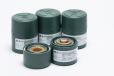
A summary of all the radiopharmaceuticals available through ANSTO.
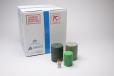
A summary of all the radiochemicals available at ANSTO.
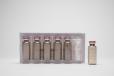
A summary of all the nuclear medicine accessories available at ANSTO.
Over the past 70 years ANSTO has been building Australia’s nuclear expertise and despite being small in scale, today we are complex and sophisticated nuclear nation.
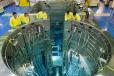
Nuclear science is applied by ANSTO's scientists in many areas that are vital to Australia's future, including agriculture, industry and manufacturing, minerals construction, health and environment. Our work in the development and applications and new knowledge and skills arises from world-class experience in nuclear science and technologies.

ANSTO joined the Australian delegation at the 68th General Conference of the International Atomic Energy Agency (IAEA) last month in Vienna, participating in a number of insightful side-events and fruitful bilateral partnership meetings.
ANSTO commenced an aerosol sampling program thirty years ago this week to characterise these pollutants and ultimately, identify their sources, which has taken it to the forefront of environmental monitoring of this type in Australia and the region.
Thirty years of ANSTO's unique capability in monitoring fine particle pollution provides insight on bushfire smoke.
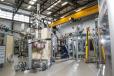
When an energetic ion beam hits a sample it will interact with the atoms through a number of very complex interactions. By detecting and measuring the reaction products resulting from the various interactions and their intensities, you can obtain quantitative data on the sample's constituent elements and their spatial distribution.
Use of nuclear techniques to benefit industry and consumers
A team of researchers including the University of Rochester, CSIRO and ANSTO has found methane emissions from human fossil sources have been greatly underestimated.