Some surprises about the degradation of microplastics in our oceans
The process by which plastic degrades in the ocean facilitates its entry into the natural carbon cycle efficiently as carbon dioxide.


Showing 121 - 140 of 684 results
The process by which plastic degrades in the ocean facilitates its entry into the natural carbon cycle efficiently as carbon dioxide.
The role of trace elements as palaeoclimate proxies has been explored in ANSTO-led collaborative environmental research.
ANSTO and the Embassy of Argentina in Australia proudly hosted an event commemorating the 15th anniversary of the opening of the Open Pool Australian Lightwater (OPAL) multi-purpose nuclear reactor on 18 October.
Dr Mathew Johansen, an environmental scientist at ANSTO, presented in an online IAEA training workshop on Advanced Topics in Radiochemistry Techniques this week.
Project focuses on enhancing crop productivity in Asia Pacific countries by improving soil and water.

Learn. Create. Innovate
Research highlights how biodistribution of a toxic substance essential to understand all exposure risks.
On average, there is now 17 per cent less rainfall across Western Australia’s south-western region than was recorded prior to 1970. This rainfall reduction has economic, social and environmental implications for the region, in particular for the growing capital of Perth, as well as water-dependent industries in the state.
Today is World Environment Day, a United Nations initiative for encouraging worldwide awareness and action for the environment. This year’s theme is “Beat Air Pollution”, a call to action to combat this global crisis.
More than 3,200 solar panels have been installed across the rooftops of the Australian Nuclear Science and Technology Organisation’s (ANSTO) Australian Synchrotron in Clayton, offsetting enough power to light up the whole MCG for more than five years.
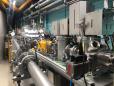
The Medium Energy- X-ray Absorption Spectroscopy beamlines provides access to XANES and EXAFS data from a bending magnet source, optimised for cutting-edge applications in biological, agricultural and environmental science in an energy range that is not currently available at the Australia Synchrotron.

The OPAL research reactor's design and integrated safety features mean it is extremely safe; a fact confirmed by independent analysis.
PhD candidate Vienna Wong is using her FutureNow Scholarship to research ultra-high temperature ceramics, which are emerging materials for extreme environments.
Environmental scientists at ANSTO will contribute to major Antarctic research project in Antarctica funded by the Australian Research Council.
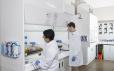
ANSTO’s Radioanalytical Chemistry (RAC) facility combines techniques in radiochemistry and radiological measurement by alpha spectrometry, gamma-ray spectrometry, and liquid scintillation analysis to deliver radiological assessments.
Two ANSTO environmental scientists are part of a large team led by the Australian National University (ANU), who have received an Australian Research Council Discovery Project grant to investigate how environmental change and human activities since industrialisation have impacted the transport and deposition of toxic metals on the south coast of Australia, Tasmania, and remote Southern Ocean islands.
A unique scientific capability comprising a single research platform for high-fidelity simulation, real-time dosimetry, and biological response data is available all from a neutron instrument.
Australia’s nuclear agency ANSTO is continuing to lead planning efforts to repatriate what is called a TN-81 cask of intermediate-level radioactive from the United Kingdom in 2022.