Redefining measurements
ANSTO is part of collaboration conducting experiments to redefine the kilogram linking it to a fundamental constant of nature.


Showing 1241 - 1260 of 2173 results
ANSTO is part of collaboration conducting experiments to redefine the kilogram linking it to a fundamental constant of nature.



This data set gives students the opportunity to investigate one of today's most important environmental challenges: PFAS, often known as the "forever chemicals".
You may not have heard much about PFAS, but they have been widely used in everyday products including cosmetics, sunscreen, waterproof clothing, dental floss and even food packaging. Because these chemicals are highly resistant to breaking down, they can remain in the environment for a very long time.
Using real data produced by ANSTO scientists, teachers can get students to:
ANSTO is part of a contingent showcasing Australian science at the Australian Pavilion at the World Expo Osaka in October.

Under the Government Procurement (Judicial Review) Act 2019 (Cth) ANSTO will publish Public Interest Certificates (PICs) for the current financial year where appropriate.

The Australian Nuclear Science and Technology Organisation (ANSTO) has joined a team, lead by the US Department of Energy’s Pacific Northwest National Laboratory (PNNL), to install a high resolution monitoring system at ANSTO’s medical isotope production facility in Lucas Heights, Australia.
University of Melbourne researchers have investigated a method to produce magnetic nanoparticles in Australia for use in COVID-19 PCR tests.
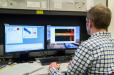
X-ray instruments, physical properties measurements, sample environments, helium polarising system and computing infrastructure
Sri Lankan students took part in an innovative hackathon to develop novel solutions to a wastewater runoff problem from reverse osmosis water treatment plants.
Research reports for the first time how solid methane and nitrogen expand in response to temperature changes and resolves an historic ambiguity relating to the structure of nitrogen.
Thales Australia, a key supplier to the Australian Defence Forces, provided an industrial challenge to National Graduate Innovation Forum participants relating to the production of piezoelectric ceramic components used in naval sonar arrays and systems.
Research to provide critical knowledge on groundwater residence times, important catchments and aquifers in order to ensure sustainable yields of groundwater resources.