
Infrastructure - Planetary Materials
At ANSTO we have a large range of facilities that can be used to investigate planetary materials.


Showing 1301 - 1320 of 2173 results
At ANSTO we have a large range of facilities that can be used to investigate planetary materials.

Jack the Super Prawn lives in the Great Barrier Reef and uses his superpowers to protect the environment. Jack’s main job is to educate young readers on the impact of plastic and other types of pollution and to empower them to find a solution.
Created by Antoine Jaja, Jack’s first two adventure books entitled, “Drastic Plastic” and “Pollution Solution,” are now available in paperback in bookstores throughout Australia, as well as the ANSTO Shop. ANSTO provided scientific input into these stories that are helping to raise awareness of the impact of pollution on our waterways and the marine environment.
Recent research led by a team from Flinders University has developed an approach based on a molecular cage to trap dangerous PFAS chemicals.
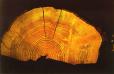
Radiocarbon dating is a well-known method for determining the age of materials up to the age of approximately 50,000 years.
New mentor program offers deep brains trust to support the development of southern Sydney startups
Research makes it possible to assess if and how rocky coasts, which make up the majority of the world’s coasts including Australia and New Zealand, will respond to changes in marine conditions.
Using PET and simulations to verify the accuracy of dose and range in advanced therapy with heavy ions
Researchers from the Health Research and Technology Group at ANSTO and the University of Wollongong have developed a new device that could improve the quality control of accelerator-based boron neutron capture therapy, a promising radiation therapy for treating aggressive cancers.
Study reveals that properties of polycrystalline materials can be derived from microscopic single crystal samples
ANSTO is taking its innovative ANSTO Synroc® and CORIS360® technologies to the world stage at the Waste Management Symposia 2024 in Phoenix, Arizona USA this week (10 – 14 March 2024). Joining over 45 other countries and around 3,000 attendees, an Australian Government contingent comprising of ANSTO and the Australian Radioactive Waste Agency is in attendance to showcase Australia’s extensive radioactive waste management capabilities.
ANSTO contributes to major study on global warming by measuring methane and carbon monoxide trapped in ice.
Research provides insights into Tasmania’s Lake Vera more than 800 years ago
Nuclear techniques will be crucial tools in the development of advanced materials that sustainably convert waste heat into useful forms of energy to benefit Australia.
A large collaboration of Australian and New Zealand researchers has established that a thin film technology can be used to monitor stormwater effectively and provides a way to translate the presence of metal contaminants into potential risks to aquatic ecosystems.
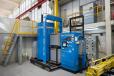
Hot Isostatic Pressing supports advanced manufacturing by increasing a material's density and reducing porosity. This capability complements ANSTO’s extensive suite of instruments and techniques for characterising materials and final products.
ANSTO will be participating in a new Industrial Transformation Training Centre established and funded by the Australia Research Council to advance the use of bioactive ingredients in Australia.
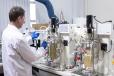
Biodeuteration involves the growth of microorganisms in a heavy water (deuterium oxide) culture medium supplemented with either a deuterated or hydrogenated carbon substrate, depending on the level of deuteration required. The biomass is harvested and the deuterated molecule (e.g. protein) is purified and characterised.