Senior Scientist - MX


Showing 1381 - 1400 of 2448 results
Materials researcher with a passion for chemistry, Matthew Teusner is investigating lithium sulfur materials to support the next step in cleaner battery power.

Beamtime guide on the SAX / WAXS beamline at the Australian Synchrotron.

Materials researchers focus on development, performance and in-service degradation of nickel-based superalloys, reinforced carbon-Carbon (C/C) composites, and ultra-high temperature ceramics (UHTC).

Material researchers at ANSTO use a range of in-house capabilities in the development, testing and characterisation of existing and emerging materials for extreme environments of the novel nuclear (fission/fusion) based energy-generation systems.
ANSTO is a unique national science organisation that began operating under its predecessor The Australian Atomic Energy Commission (AAEC) 70 years ago.
Analysing the microstructure of paracetamol using synchrotron infrared optical technique provides insights.
ANSTO has supported research led by a University of Sydney team who gained insights into how oil molecules retain their ‘liquid-like’ properties when they are chemically attached as an extremely thin layer to solid surfaces.
Progress on a more environmentally-friendly production method for hydrogen peroxide.
Evidence of the earliest occupation of the coasts of Australia from Barrow Island, Northwest Australia.
Scientists from the Walter and Eliza Hall Institute (WEHI) are using the unique immune system of the alpaca and techniques at the Australian Synchrotron as part of research using antibodies to disrupt COVID-19 viral entry into cells.
Monica Hibberd and Hamish McDougall are working together on research into greener and more efficient energy and battery technology.
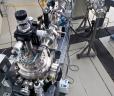
Particle induced gamma-ray emission (PIGE) is typically run in conjunction with PIXE and RBS and is used to quantify concentrations of elements such as lithium, fluorine, sodium, magnesium and aluminium.

Our sample mountings include: sample changers, selecting a cell, and sample position sticks.

On this page you will find useful information about applying for a position at ANSTO and some tips on how you can prepare for an interview.

Frequently Asked Questions on the Macromolecular Crystallography beamlines (MX1 and MX2)

This COVIDSafe Plan describes the actions that ANSTO will take to keep our staff, contractors and visitors safe and minimise the risk of the spread of COVID-19 infection.