Search hero banner

Search results

Showing 141 - 160 of 789 results

Travel Funding synchrotron

Travel Funding

The Australian Synchrotron provides funding support for successful beamtime applicants in the form of travel funding and/or onsite accommodation. Travel funds granted are to be used solely to cover the majority of the cost to travel to the AS facility. The User Office will book accommodation for interstate user groups at the onsite AS Guesthouse.


New technique to improve global climate models

An investigation that set out to resolve some of the uncertainty in the sources and quantities of pollutants reaching Antarctica has produced a new experimental technique to identify and characterise recently terrestrially-influenced air reaching Antarctica.

Cosmetic chemistry

Deuteration and nuclear techniques can contribute to the science of beauty.

Groundwater study

Using isotopes to understand saltwater intrusion of Rottnest Island groundwater

Certificate of appreciation from WA DFES

ANSTO and the Australian Radiation Protection and Nuclear Safety Agency (ARPANSA) have been recognised for their valuable contributions to the search and recovery efforts for a missing 8mm-long radioactive capsule in the Western Australian outback.

Dr Pauline Treble
Project Joint Lead Investigator/Isotope Paleoclimateologist

Role at ANSTO

FLEET appointment

Instrument scientist and expert in low dimensional magnetism Dr Kirrily Rule joins FLEET ARC Centre.

Opal reactor

OPAL 2024 Shutdown

ANSTO's OPAL reactor is one of the world's most advanced and reliable research reactors today. To ensure we can continue operating OPAL safely and reliably and maximise utilisation, ANSTO must regularly carry out maintenance and upgrades.

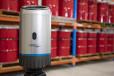
CORIS360® Gamma Neutron Imager (GNI)

CORIS360® GNI - Gamma Neutron Imager

CORIS360® GNI images gamma-ray and thermal neutron radiation sources, delivering an unprecedented ability to detect, localise, and identify nuclear materials.

Infrared microspectroscopy

Infrared microspectroscopy

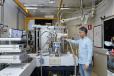
The Infrared Microspectroscopy beamline combines the high brilliance and collimation of the synchrotron beam through a Bruker V80v Fourier Transform Infrared (FTIR) spectrometer and into a Hyperion 3000 IR microscope to reach high signal-to-noise ratios at diffraction limited spatial resolutions between 3-8 μm.

Far Infrared beamline

THz - Far Infrared

The THz/Far-IR Beamline couples the high brightness and collimation of a bend-magnet synchrotron radiation to a Bruker IFS125HR spectrometer providing high-resolution spectra (0.00096 cm-1) with signal to noise ratio superior to that of thermal sources up to 1350 cm-1 for gas-phase applications; the beamline also delivers signal to noise ratio superior to that of thermal sources up to 350 cm-1 for condensed phase samples.

Pagination