Pilot project re-designs instrument cabin
The first pilot project at the Australian Synchrotron takes place following a Memorandum of Understanding between nandin and Swinburne University of Technology and Design Factory Melbourne (DFM).


Showing 141 - 160 of 410 results
The first pilot project at the Australian Synchrotron takes place following a Memorandum of Understanding between nandin and Swinburne University of Technology and Design Factory Melbourne (DFM).
Australia and Sri Lanks signs new partnership to fight chronic kidney disease.
ANSTO is a partner on the National Space Qualification Network (NSQN) led by the Australian National University (ANU) that will transform Australia into a world-leading space centre by enhancing facilities to test payloads, components, and hardware prior to their use in harsh environments of space.
Restoring soil carbon can bring benefits for agricultural productivity and climate change mitigation.
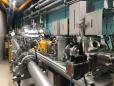
The Medium Energy- X-ray Absorption Spectroscopy beamlines provides access to XANES and EXAFS data from a bending magnet source, optimised for cutting-edge applications in biological, agricultural and environmental science in an energy range that is not currently available at the Australia Synchrotron.
The Australian Synchrotron has played a crucial role in the discovery of a new cancer drug for the treatment of leukaemia.
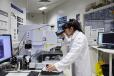
The Infrared Microspectroscopy beamline combines the high brilliance and collimation of the synchrotron beam through a Bruker V80v Fourier Transform Infrared (FTIR) spectrometer and into a Hyperion 3000 IR microscope to reach high signal-to-noise ratios at diffraction limited spatial resolutions between 3-8 μm.
In 2023 we’re celebrating the 70th Anniversary since Australia began developing our nation’s Australia’s nuclear capabilities.
A cross-disciplinary team has used laboratory-based and synchrotron-based infrared spectroscopy imaging techniques to monitor the waxy surface of living plant leaves in real-time to gain insights into plant physiology in response to disease, biological changes or environmental stress.
Research on the mechanism of cell death has insights to bring progress on neurodegenerative diseases and plant biosecurity.
Whilst at ANSTO’s Australian Synchrotron today, Prime Minister Scott Morrison announced new funding for the Australian Precision Medicine Enterprise (APME) Project. The Australian Government will contribute $23m in grant funding under the Manufacturing Collaboration Stream of the Modern Manufacturing Initiative (MMI) towards the $71.2m project.
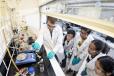
ANSTO Big Ideas encourages students to creatively communicate the work of an Australian scientist, and explain how their work has inspired them to come up with a Big Idea to make our world a better place. This competition is intended to engage and support Australian students in years 7-10 in Science and encourage them to pursue studies and careers in STEM.

With more than 50 years of experience in monitoring natural and anthropogenic radionuclides in the environment, ANSTO can provide the crucial data and insights you need to assist with the planning and risk management associated with oil and gas decommissioning.
Contributing to research that strengthens the defence of Australia
Scientists from Monash, ANSTo and China have developed an ultra-thin membrane that could separate harmful ions from water or capture gases.