nandin - one year on
It’s been one year since nandin opened its doors. Let's take a look back at what we've achieved so far before setting our sights on the future.


Showing 141 - 160 of 692 results
It’s been one year since nandin opened its doors. Let's take a look back at what we've achieved so far before setting our sights on the future.
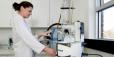
Our research group carries out fundamental research uniquely applied to industrial problems in the areas of uranium, rare earth and lithium processing.
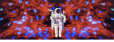
In space, without the protection of the magnetosphere, the type and dose of radiation is considerably different to what is naturally experienced on earth.
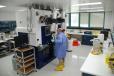
Using the OPAL multipurpose reactor,, ANSTO can provide a diverse suite of radioisotopes for research and applications
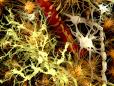
This program uses ANSTO’s nuclear capabilities to identify, quantify, and monitor the mechanisms which cause, or influence the development and progression of chronic diseases.
ANSTO is interested finding students to collaborate on Generation IV reactor systems.
New mentor program offers deep brains trust to support the development of southern Sydney startups
Robert Russell has been awarded his PhD
Dr Angus Cowan has been presented with the Stephen Wilkins Medal, which is awarded annually to a PhD student who completed an outstanding thesis based on work at ANSTO’s Australian Synchrotron.
The ANSTO Awards in Nuclear Science and Technology 2018 were presented on Friday 2 November at The Australian Museum, and showcased ANSTO’s unique nuclear science and technology capabilities, which enable progress in the key areas of health research and innovation for industry.
The NSW Government will invest $12.5 million to support the expansion of the Innovation Precinct at the Lucas Heights campus of the Australian Nuclear Science and Technology Organisation (ANSTO).
ANSTO researchers have taken up the challenge to develop a coating for the cladding used in nuclear reactors to prevent it from taking up hydrogen and releasing it if temperatures get too high and repair itself if damaged.
ANSTO has made progress on a more cost-effective way to produce the medical radioisotope molybdenum-99 (Mo-99), with less enrichment of uranium-235 (U-235) and produce less waste.
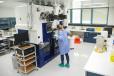
Research and development activity explores new, boutique radioisotopes, including positron, gamma and beta/gamma emitter. The aim is to provide material for the next generation of diagnostic and therapeutic radiopharmaceuticals
Researchers from Murdoch University and associated collaborators are using ANSTO’s unique nuclear capabilities to gain detailed information about how wheat crops take in administered micronutrients to maximise their efficient use.

The BRIGHT Project will expand the beamline infrastructure of the Australian Synchrotron to increase both its capacity and capabilities.