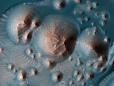
The characterisation of planetary materials
ANSTO provides a range of capabilities using neutrons, X-rays and infrared radiation to study the solids, liquids and gases that might be found in materials in our solar system and beyond.


Showing 1461 - 1480 of 2555 results
ANSTO provides a range of capabilities using neutrons, X-rays and infrared radiation to study the solids, liquids and gases that might be found in materials in our solar system and beyond.

Resources and a list of user publications associated with Infrared microspectroscopy.
Outstanding individuals and teams have been recognised for their outstanding work, innovation, excellence in the 2025 ANSTO Awards.

All new and returning science facility users are required to complete a Visit Request to identify the proposal/reason for attendance at ANSTO.

On this page you will find useful information about applying for a position at ANSTO and some tips on how you can prepare for an interview.
All safety requirements must be met while working at the Australian Centre for Neutron Scattering. Failure to do so may result in the suspension of experiments.
Australia’s new state-of-the-art nuclear medicine facility gets green light.
Australia assists in the collection of marine sediments to support contaminant quality control measures by IAEA.
Following a decade of imaging to support research and clinical trials at ANSTO and the University of Sydney’s Brain and Mind Centre at Camperdown, two PET scanners have been transferred to the University of Wollongong.

The Infrared microspectroscopy microscopes can record spectra from a range of different samples; from thin microtomed sections to polished blocks and embedded particles. This section highlights the types of samples that can be analysed using the IRM beamline
Accelerator Mass Spectrometry (AMS) is an ultra-sensitive analytical technique based on the use of an ion accelerator as a powerful mass spectrometer.

Data analysis on the X-ray fluorescence microscopy beamline at the Australian Synchrotron.