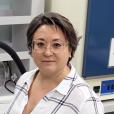
Material scientist
Role at ANSTO
Dr Inna Karatchevtseva undertakes work at ANSTO in two main areas: defence industry research and fundamental materials research.


Showing 1561 - 1580 of 1815 results
Dr Inna Karatchevtseva undertakes work at ANSTO in two main areas: defence industry research and fundamental materials research.
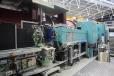
A neutron reflectometer for vertical samples.

Rochelle Donohue is a dedicated science communicator. She has a Bachelor of Animal and Veterinary Bioscience, as well as a Bachelor of Education (Primary).

Over the last decades, neutron, photon, and ion beams have been established as an innovative and attractive investigative approach to characterise cultural-heritage materials.

Mia is in her second year of Mechatronics Engineering at the University of Wollongong. She has worked at ANSTO, in the first cohort of the engineering cadetship program, since July 2024.

Analysis of environmental samples (predominantly soils, groundwaters, vegetation and biota) for the presence of radionuclide via chromatographic separation methods.

ANSTO has produced a comprehensive report for the NSW Department of Planning and Environment that represents a significant scientific investigation of the connections, pathways and processes of water loss from the Thirlmere Lakes system.
The Graduate Institute is part of ANSTO’s Innovation Precinct and links all graduates together to create a network of Australia’s brightest young minds focused on the future.
This week, ANSTO hosted the 10th annual Regional Advisory Safety Committee for research reactors in Asia pacific (RASCAP). This a joint IAEA-Asian Nuclear Safety Network (ANSN) supported forum to foster networking and regional cooperation, and for facilitating use of competencies in the region to cover specific safety issues in research reactors.
ANSTO was proud to support the first science-themed AuslanX event for the greater Sydney Deaf community during National Science Week.

The Radon Analytical Laboratory operates a comprehensive suite of instrumentation for the monitoring and analysis of natural radioactivity resulting from radon, thoron and their progeny.
ANSTO team earns top paper award from American Ceramic Society
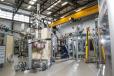
When an energetic ion beam hits a sample it will interact with the atoms through a number of very complex interactions. By detecting and measuring the reaction products resulting from the various interactions and their intensities, you can obtain quantitative data on the sample's constituent elements and their spatial distribution.
This week ANSTO formally launched the nandin Deep Technology Incubator, a full-service innovation hub that enables the best and the brightest minds to come together to foster innovation and change.
Dr Inna Karatchevtseva, who collaborates with DMTC, was among those identified by The Australian in its Research magazine as a national leader in her field of ceramic engineering