

Showing 161 - 180 of 222 results
Celebrating Australian women in nuclear
Highlighting the contribution of four inspirational ANSTO leaders on International Women's Day.
New imaging approach using live plants will benefit agriculture and environment
A cross-disciplinary team has used laboratory-based and synchrotron-based infrared spectroscopy imaging techniques to monitor the waxy surface of living plant leaves in real-time to gain insights into plant physiology in response to disease, biological changes or environmental stress.
Blueprint for future drugs
Structure of protein involved in immune response pair revealed.
Instrument scientist Dr Susi Seibt joins Superstars of STEM to showcase the power of advanced scientific techniques
Transport revolution on the horizon following discovery of ‘stainless magnesium’

Scientist - XAS
Role at ANSTO
Celebrating crystallography - New video
Self-assembly of the bacterial flagellar motor
Macromolecular crystallography continues to help elucidate complex protein structures
International collaboration uses cryo-electron tomography to determine the structure of a complex responsible for sorting and delivering cellular cargo.
Aboriginal ochre art under high-tech ‘hands-off’ focus to map culture trail
Success of Australian Synchrotron Open Day reflects public interest in science
Close to 3000 members of the public decided to have a look at a building that is shaped like a doughnut, is as big as a football field and creates light more powerful than the sun when the Australian Synchrotron held its bi-annual Open Day held on Sunday, 16 October.
Research explains how some plants evolved to depend on fire for survival
Researchers based at Monash University and the Swedish Museum of Natural History have pioneered the use of nuclear imaging techniques at ANSTO’s Centre for Neutron Scattering to resolve long-standing problems in plant evolutionary history linked to wildfires.
The microstructure of paracetamol
Analysing the microstructure of paracetamol using synchrotron infrared optical technique provides insights.

Senior Project Manager
Role at ANSTO
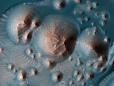
The characterisation of planetary materials
ANSTO provides a range of capabilities using neutrons, X-rays and infrared radiation to study the solids, liquids and gases that might be found in materials in our solar system and beyond.
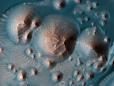
The characterisation of planetary materials
ANSTO provides a range of capabilities using neutrons, X-rays and infrared radiation to study the solids, liquids and gases that might be found in materials in our solar system and beyond.
New grant introduces state-of-the-art capability in stress engineering for Australian industry
New facility will greatly enhance Australia’s capability in stress engineering for industry
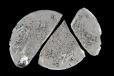
The impact of boron on glass surface properties
Within the bulk structure of such glasses, boron is known to be a key actor, as it exhibits intriguing and composition-dependent changes in coordination state that often drive properties.