Progress on understanding what makes COVID-19 more infectious than SARS
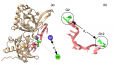
Researchers led by the University of Bristol (UK) have identified a possible cause of SARS-CoV-2’s increased infectivity compared to SARS-CoV


Showing 161 - 180 of 371 results
Researchers led by the University of Bristol (UK) have identified a possible cause of SARS-CoV-2’s increased infectivity compared to SARS-CoV
Whilst at ANSTO’s Australian Synchrotron today, Prime Minister Scott Morrison announced new funding for the Australian Precision Medicine Enterprise (APME) Project. The Australian Government will contribute $23m in grant funding under the Manufacturing Collaboration Stream of the Modern Manufacturing Initiative (MMI) towards the $71.2m project.

ANSTO is proud to host the Shorebirds Competition for the fifth year. This unique environmental poster competition is free to enter and offers over $4500 in prizes for students and schools!

Discover the amazing world of nuclear science from your classroom. Join us for Meet an Expert, Nuclear Science Inquiry Skills, Junior Science, and Online Depth Study sessions for Chemistry, Physics and Investigating Science.
The Scientific Computing team supports researchers by performing numerical simulations that complement experimental research. In particular, we use state-of-the-art software to perform computational quantum mechanical modelling, molecular dynamics simulations, lattice dynamics calculation, data analysis and visualisations.

Role at ANSTO
Grant supports development of handheld technology to verify origin of seafood.
ITRAX has now analysed more than a kilometre of cores since it became operational in 2012.
Excellent radiolabelling facilities and the operation of OPAL, a world-class multi-purpose nuclear reactor, enable ANSTO to produce a large range of radioisotopes for Australian researchers in both radiopharmaceutical and environmental areas.
Research represents significant step towards developing vaccine
A pioneering study led by Professor Junpei Yamanaka of Nagoya City University and an international team that included ANSTO has delivered transformative insights into the behaviour of colloidal particles under microgravity.

Synchrotron light is the electromagnetic radiation emitted when electrons, moving at velocities close to the speed of light, are forced to change direction under the action of a magnetic field.