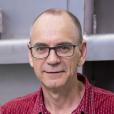
Instrument Scientist
Stephen received his PhD (Physical Chemistry) from Griffith University in 1996.


Showing 161 - 180 of 1507 results
Stephen received his PhD (Physical Chemistry) from Griffith University in 1996.

Online and interactive while in your home. Kids can zoom into these school holidays workshops and create movies, animations, arcade games, roller coasters and more. Limited spaces: book now.

By submitting a proposal for Merit Access to ANSTO’s Biosciences, Centre for Accelerator Science, Isotope Tracing, Nuclear Stewardship or the Vivarium capabilities, you are agreeing to the following Terms and Conditions. These Terms and Conditions apply to external merit researchers, scientific collaborators and partners unless there is a specific agreement in place between ANSTO and the home institution of the Principal Investigator.
With a well-established portfolio of nuclear research and the operation of Australia's only nuclear reactor OPAL, ANSTO scientists conduct both fundamental and applied research on fuel for current, advanced, and future nuclear technology systems.
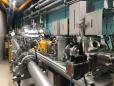
The Medium Energy- X-ray Absorption Spectroscopy beamlines provides access to XANES and EXAFS data from a bending magnet source, optimised for cutting-edge applications in biological, agricultural and environmental science in an energy range that is not currently available at the Australia Synchrotron.
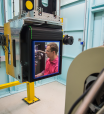
The High Performance Macromolecular Crystallography beamline will enable the study of very small (sub-5 micrometre) or weakly diffracting crystals, providing a state-of-the-art high-throughput facility for researchers. MX3 will be able to study the structures of large proteins and protein complexes for virology, drug design and industrial applications via goniometer mounted crystals, in-tray screening, or via serial crystallography methods.

This statement outlines the ways in which the events organised and run by ANSTO meet the goals outlined in the ANSTO Environmental Sustainability Strategy in the aim to reduce ANSTO’s environmental footprint.

Guidance for obtaining and maintaining human or animal ethics approval at the Australian Synchrotron.

ANSTO is home to over AUD$1.3B state of the art instruments and science technology. To access ANSTO’s world-leading and highly specialised facilities and capabilities, please contact our Industry Engagement team. This way we can co-ordinate your enquiry and provide advice on your application.

In partnership with the Australian Museum as part of National Science Week explore the 2020 hackathon theme of Deep Blue: Innovation for the future of our oceans
An unassuming rock shelter in the Flinders Ranges has been revealed as the oldest known evidence of Aboriginal Australian settlement, thanks in part to advanced nuclear techniques, technology and scientists.
Thirty years of ANSTO's unique capability in monitoring fine particle pollution provides insight on bushfire smoke.
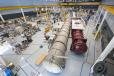
The Australian Centre for Neutron Scattering (ACNS) is a major research facility for neutron science that comprises a suite of neutron instruments with a range of techniques for scientific investigations in physics, chemistry, materials science, medicine and environmental science among other fields.
ANSTO recently hosted a public Ask Us Anything event on nuclear medicine, sharing information on how we safely manufacture and distribute nuclear medicine across Australia each week to hundreds of hospitals and clinics.

Hock Ch'ng's primary responsibilities involve the formulation, development and implementation of strategies, programs, policies and procedures as creative solutions to complex business concerns involving technical, occupational health and safety (OHS),