
A free, nationwide science competition for primary and secondary school students in Years 3 to 10, Think Science! encourages students to work as part of a team to perform an investigation using the Science Inquiry skills from the Australian Curriculum and document their process and findings in a video. Over $10,000 in prizes are on offer for winning schools and students.

Showing 1761 - 1780 of 2448 results
Collaboration locates elusive oxygen ions in new solid electrolyte
Study of polar ice confirms carbon-climate feedback
Investigators have verified and quantified the relationship between the Earth’s land biosphere and changes in temperature and provided evidence that temperature impacts the cycling of carbon between land, ocean and the atmosphere.
Australian researchers reveal how the immune system’s ‘friendly fire’ can turn malaria deadly

Koala - Laue Diffractometer
Koala is one of the leading small-molecule crystallography instruments in the world for determining the complex crystal structure of a wide range of chemicals and minerals.
X-ray technique used in research on early life forms
Singapore researchers publish findings of link between proteins of archaea and eukaryotes despite being separated by more than 2 billion years of evolution.
Contribution to authoritative nuclear publication
ANSTO has contributed to the internationally-distributed handbook on plutonium published by the American Nuclear Society.
Contribution to book on food structure
Contribution to Handbook of Food Structure and Development showcases ANSTO expertise in food science.
Graduate Institute
The Graduate Institute is part of ANSTO’s Innovation Precinct and links all graduates together to create a network of Australia’s brightest young minds focused on the future.
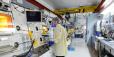
Update on building 23 at ANSTO
The Australian Government recently announced $30 million to design a new world-leading nuclear medicine manufacturing facility at ANSTO’s Lucas Heights campus, and replace and an ageing facility.
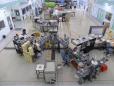
2MV STAR Tandem Accelerator
The 2MV STAR tandem accelerator, performs both IBA and AMS analyses
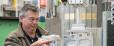
Services - Kowari
Sample environments, Data analysis.
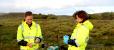
Tritium & other LSC
Accurate low level tritiated water (HTO) data is an essential tool for groundwater dating and understanding groundwater recharge processes.

Manipulating a Thermosalient Crystal Using Selective Deuteration
First molecular spectroscopy on TAIPAN's Beryllium-Filter Option
Work on Graphene-based Membranes published in Science Advances

Think Science!
Experiments carried out on Antarctic flight
State- of-the-art microdosimeters used in research
Rare boomerangs used by ancestors of Yandruwandha Yawarrawarrka people dated at ANSTO
A rare collection of traditional Aboriginal wooden objects in varying degrees of preservation found along a dry creek bed in South Australia have been dated to a period spanning 1650 to 1830 at the Centre for Accelerator Science at ANSTO.
Investigating Ozone
Ozone in the upper atmosphere is a crucial shield of UV, but ozone at surface levels is a respiratory irritant and health hazard.
Students investigate surface-level ozone concentrations in the air around Liverpool, NSW, using descriptive statistical analysis, a univariate analysis and a bivariate analysis to explore the data. Students also investigate the relationship between ozone concentration and certain pollutant gases, as well as the effect of temperature.