Progress on hydrogels
Research confirms heating can increase strength of a type of hydrogel.


Showing 181 - 200 of 289 results
Research confirms heating can increase strength of a type of hydrogel.
With a well-established portfolio of nuclear research and the operation of Australia's only nuclear reactor OPAL, ANSTO scientists conduct both fundamental and applied research on fuel for current, advanced, and future nuclear technology systems.
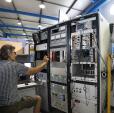
ANSTO provides multiple sources for radiation testing of materials and devices including Co-60 gamma sources, x-ray, proton and heavier ion-beams.


This information is provided as a general advice to shipping or bringing samples to ACNS. You should check that details are current when arranging sample transport.
Today is World Environment Day, a United Nations initiative for encouraging worldwide awareness and action for the environment. This year’s theme is “Beat Air Pollution”, a call to action to combat this global crisis.
New oxygen ion conducting material for use in solid oxide fuel cells and other devices
Dingo sees through heavy corrosion to help dentify an historic firearm.
PHD student Dr Leonie van ‘t Hag has been awarded the prestigious 2017 ANSTO, Australian Synchrotron Stephen Wilkins Medal for her PhD thesis.
Collaboration investigates a promising new nanoparticle for potential use in combination with other therapies for brain cancer
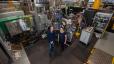
Specifications, Instrument reference, User Manual, Getting started guide.
Journal of Applied Crystallography features QUOKKA
Pioneering work on materials for energy production, such as lithium ion batteries, has made ANSTO a centre of specialist capabilities and expertise.
The University of Newcastle and UNSW [GW1] are using advanced neutron scattering techniques at ANSTO to carry out research on the structure of polymers in complex salt environments that will ultimately provide a way to predict their behaviour for real-world applications.
Instrument scientist and expert in low dimensional magnetism Dr Kirrily Rule joins FLEET ARC Centre.
ANSTO has contributed to international research on quasicrystals that opens the door to tailored magnetic materials.