

Showing 181 - 200 of 1070 results

SAAFE Research Internship Program
The SAAFE Program supports early career researchers at PhD and Postdoctoral level to expand research and innovation activities within Human Health, the Environment and the Nuclear Fuel Cycle, to initiate sustainable research networks and linkages to support Australia, New Zealand and France research and innovation.
The use of Small angle X-ray and neutron scattering in food colloids
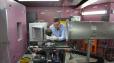
Dingo - Neutron Imaging
Neutron imaging or tomography creates a whole series of three-dimensional images of an object that can be reconstructed.
Initial findings from an IAEA project on the status of the medical physics profession in diagnostic radiology and image guided interventional procedures in the Asia–Pacific published
A research paper that shares early results from an IAEA funded project evaluates the state of medical physics in diagnostic radiology and image-guided procedures in the Asia-Pacific region has been published in Physical and Engineering Sciences in Medicine.
Pass the salt: can sodium power the 21st century
Atomic structure of new cathode material for sodium ion batteries helps explain long life
The International Year of Light comes to an end

Compressed sensing technology
Using the theory of compressed sensing technology, a team of physicists and scientists invented and developed the CORIS360® platform imaging technology. Compressed sensing imaging can generate an image with far fewer samples compared with traditional imaging techniques.
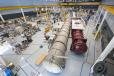
Australian Centre for Neutron Scattering
The Australian Centre for Neutron Scattering (ACNS) is a major research facility for neutron science that comprises a suite of neutron instruments with a range of techniques for scientific investigations in physics, chemistry, materials science, medicine and environmental science among other fields.
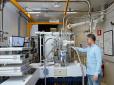
Beamtime guide - Far infrared
Beamtime guide on the Far infrared beamline at the Australian Synchrotron.
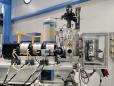
High-energy heavy ion microprobe
The high-energy heavy-ion microprobe is used for the characterisation or modification of material properties at depths from approximately 1 micrometre to maximum depths of up to 500 micrometres from the material surface.