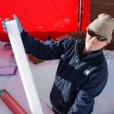
Smart silicone coatings that can change their friction and stickiness
Research led by a group from the University of Newcastle has found a new way to make silcone surfaces – and have even discovered that they can control how slippery they are.


Showing 1861 - 1880 of 2256 results
Research led by a group from the University of Newcastle has found a new way to make silcone surfaces – and have even discovered that they can control how slippery they are.
A cross-disciplinary team has used laboratory-based and synchrotron-based infrared spectroscopy imaging techniques to monitor the waxy surface of living plant leaves in real-time to gain insights into plant physiology in response to disease, biological changes or environmental stress.
The most important data from NASA’s first crewed Artemis mission may not be its photographs, but the radiation measurements that will shape how humans work and survive beyond travel farther from Earth’s magnetic shelter safely.
At ACNS we currently have 13 instruments in our user program, which use a variety of scattering techniques to probe materials over a range of length scales.
ANSTO scientist, Dr Klaus Wilcken of the Centre for Accelerator Science, used cosmogenic nuclide dating to determine the ages of layered sand and gravel samples, in which seven footprints of the flightless bird, the moa, were found on the South Island in New Zealand in 2019.
Using nuclear techniques to help sustain Australia's finite groundwater resources
Thales Australia, a key supplier to the Australian Defence Forces, provided an industrial challenge to National Graduate Innovation Forum participants relating to the production of piezoelectric ceramic components used in naval sonar arrays and systems.
Seeing inside an ancient Australian Indigenous artefact non-invasively using neutron tomography.
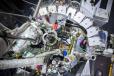
An accomplished international photographer has capture dazzling new images of one component of the main ring at our Australian Synchrotron and provided an inside view of the electron’s path when it is used.
Quantum theory explains the strange and unpredictable behaviour of subatomic particles and the smallest amounts of energy.





In July 2023, Sateesha stepped into the role of General Manager of the Minerals business unit at ANSTO.