ANSTO's material scientists honoured
Defence Materials Technology Centre honours achievements of two ANSTO collaborators.


Showing 1 - 20 of 740 results
Defence Materials Technology Centre honours achievements of two ANSTO collaborators.
ANSTO has unique facilities, capabilities and expertise to investigate materials in extreme environments for applications in energy systems, the defence industry and emerging space sector.
With a well-established portfolio of nuclear research and the operation of Australia's only nuclear reactor OPAL, ANSTO scientists conduct both fundamental and applied research on fuel for current, advanced, and future nuclear technology systems.
Atomic structure of new cathode material for sodium ion batteries helps explain long life
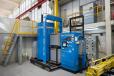
Hot Isostatic Pressing supports advanced manufacturing by increasing a material's density and reducing porosity. This capability complements ANSTO’s extensive suite of instruments and techniques for characterising materials and final products.

ANSTO’s suite of infrastructure and capabilities is ideally suited for solving problems relating to the development and characterisation of advanced materials, and the engineering of manufactured components and processes.
New material shows enhanced conductivity for solid oxide fuel cells used in satellites, spacecraft, transport vehicles and as power source
Researchers from the University of Wollongong have improved a high voltage cathode material to deliver structural stability and an unprecedented electrochemical performance for lithium-ion batteries (LIBs) in work that is extendable to other types of energy storage materials.
A collaboration of Australian scientists has used ANSTO’s Australian Synchrotron to measure the amount of carbon that is captured in microscopic seams of deep-sea limestone, which acts as a carbon sink.
Scientists at ANSTO characterise structures with atomic detail using probes such as x-rays, electrons, neutrons and ions.
A large international team led by scientists from the Institute for Superconducting and Electronic Materials at the University of Wollongong has verified that the introduction of novel molecular orbital interactions can improve the structural stability of cathode materials for lithium-ion batteries.

ANSTO offers accelerator-based particle-induced gamma-ray emission techniques to determine total fluorine concentration in a range of solid materials and rapidly screen for the presence of PFAS (perfluoroalkyl and polyfluoroalkyl substances).
Investigators from UNSW and ANSTO have provided insights into the dynamic interactions of atoms in a promising material for sodium-ion batteries.
Energy researchers from UNSW have reported progress using controlled architectural design and structural engineering as a method to fine-tune materials to have simultaneous high power and high energy density for the electrochemical storage in portable devices.
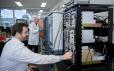
ANSTO has responsibilities mandated by the Australian Government for the maintenance of the national measurement standard for radioactivity.
Wombat used in study that showed tuneable thermal expansion by controlled gas sorption.

The ANSTO Science Series is a live and virtual meet-up that focuses on the key capacities of ANSTO’s people, partners and facilities and how they are meeting global challenges in sustainable industries, medicine, advanced manufacturing and in accelerating small business.