Search hero banner

Search results

Showing 1 - 20 of 104 results

Fission vs fusion: an explainer

The release of the Oppenheimer film, the story of the director of the Manhattan Project,  has prompted many people to go online and search for an explanation of the difference between fission and fusion, two fundamental scientific concepts.


TPD teachers development

Teacher Professional Development Courses

ANSTO is an experienced provider of Teacher Professional Development for Australian and International teachers and our courses cover a wide range of topics. Hear from expert speakers, receive new education resources, and develop lessons for your own class.

generic-background-image

Online learning

Discover the amazing world of nuclear science from your classroom. Join us for Meet an Expert, Nuclear Science Inquiry Skills, Junior Science, and Online Depth Study sessions for Chemistry, Physics and Investigating Science.

Synchrotron scientist in team that makes historic meteorite find

ANSTO’s own meteorite hunter, who is also a planetary scientist and instrument scientist Dr Helen Brand took part in an expedition led by Professor Andy Tomkins of Monash University that has found the largest meteorite strewn field in Australia since the famous Murchison meteorite event in 1969.

Star power reached in nuclear fusion

Australian scientists from ANTSO have congratulated their British colleagues for a major advance in their quest to develop practical nuclear fusion.

Posters

Posters

ANSTO provides a range of learning resources for students interested in science or studying for a school project. ANSTO also provides educational school holiday workshops and in-school-term science tours.

ANSTO aerial

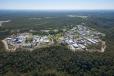
Vision

ANSTO is one of Australia’s largest public research organisations and is widely recognised as an international player in the field of nuclear science and technology.

OPAL multipurpose reactor

OPAL multi-purpose reactor

Australia’s Open Pool Australian Lightwater (OPAL) reactor is a state-of-the-art 20 megawatt multi-purpose reactor that uses low enriched uranium (LEU) fuel to achieve a range of  activities to benefit human health, enable research to support a more sustainable environment and provide innovative solutions for industry.

hifar-history-web

Our History

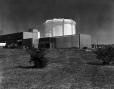
In April 15, 1953, Australia entered the nuclear science arena, when the Atomic Energy Act came into effect. The Australian Atomic Energy Commission (AAEC) followed and in 1987 the AAEC evolved into the Australian Nuclear Science and Technology Organisation (ANSTO) as it’s known today.

Pagination