
About us
The Detection & Imaging group builds on ANSTO’s 70-year history of scientific achievements and contributions in meeting the nuclear needs of industry, globally.


Showing 1 - 17 of 17 results
The Detection & Imaging group builds on ANSTO’s 70-year history of scientific achievements and contributions in meeting the nuclear needs of industry, globally.
A dedicated team of radiation specialists from the Australian Nuclear Science and Technology Organisation (ANSTO) are behind the successful detection and rapid retrieval of a missing radioactive source in outback Western Australia.

CORIS360® GNI images gamma-ray and thermal neutron radiation sources, delivering an unprecedented ability to detect, localise, and identify nuclear materials.
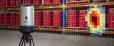
CORIS360 delivers fast, accurate radiation detection and imaging, making invisible radiation visible to improve safety and decision making in radioactive environments.
The Australian Nuclear Science and Technology Organisation (ANSTO), will launch its new radiation detection technology, the CORIS360 Gamma Neutron Imager (CORIS360 GNI), at the 2026 Waste Management Symposia in Phoenix, Arizona, USA, this March.
The proof of concept for the approach used in the early development of the new gamma-ray imaging system has been published,
ANSTO is taking its innovative ANSTO Synroc® and CORIS360® technologies to the world stage at the Waste Management Symposia 2024 in Phoenix, Arizona USA this week (10 – 14 March 2024). Joining over 45 other countries and around 3,000 attendees, an Australian Government contingent comprising of ANSTO and the Australian Radioactive Waste Agency is in attendance to showcase Australia’s extensive radioactive waste management capabilities.

ANSTO provides access to specialised facilities and capabilities by application. Please ensure that you contact the relevant ANSTO scientist for advice before submitting a proposal.

A tiny 8mm by 6mm radioactive capsule went missing in January 2023, somewhere along a 1400 kilometre journey from Rio Tinto’s Gudai-Darri iron ore mine to its final destination in Perth, Western Australia. Find out how ANSTO's CORIS360® technology identified the exact location of the missing source.

The Infrared microspectroscopy microscopes can record spectra from a range of different samples; from thin microtomed sections to polished blocks and embedded particles. This section highlights the types of samples that can be analysed using the IRM beamline
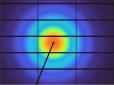
The Biological Small Angle X-ray Scattering beamline will be optimised for measuring small angle scattering of surfactants, nanoparticles, polymers, lipids, proteins and other biological macromolecules in solution. BioSAXS combines combine a state-of-the-art high-flux small angle scattering beamline with specialised in-line protein purification and preparation techniques for high-throughput protein analysis.
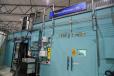
Publications and resources from the Powder Diffraction beamline.
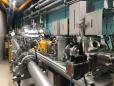
The Medium Energy- X-ray Absorption Spectroscopy beamlines provides access to XANES and EXAFS data from a bending magnet source, optimised for cutting-edge applications in biological, agricultural and environmental science in an energy range that is not currently available at the Australia Synchrotron.

Archive of ANSTO research publications, seminars and short talks.