
Deuteration Publications
Publications by ANSTO's National Deuteration Facility.


Showing 1 - 20 of 20 results
Publications by ANSTO's National Deuteration Facility.

ANSTO has been tracking and publishing data on fine particle pollution from key sites around Australia, and internationally, for more than 20 years.
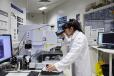
The Infrared Microspectroscopy beamline combines the high brilliance and collimation of the synchrotron beam through a Bruker V80v Fourier Transform Infrared (FTIR) spectrometer and into a Hyperion 3000 IR microscope to reach high signal-to-noise ratios at diffraction limited spatial resolutions between 3-8 μm.
New material shows enhanced conductivity for solid oxide fuel cells used in satellites, spacecraft, transport vehicles and as power source
ANSTO has played a formative role and continues to make important contributions using nuclear and isotopic techniques to understand past climates and patterns of change, maintain water resource sustainability and provide insights into the impact of contaminate in the environment.
Researchers based at Monash University and the Swedish Museum of Natural History have pioneered the use of nuclear imaging techniques at ANSTO’s Centre for Neutron Scattering to resolve long-standing problems in plant evolutionary history linked to wildfires.

The proof of concept for the approach used in the early development of the new gamma-ray imaging system has been published,

The User Advisory Committee (UAC) are pleased to present this year's invited speakers.

ANSTO User Meeting 2021 - Speakers

Four annual awards in neutron scattering were announced at Australian Neutron Beam Users Group (ANBUG) and AINSE Neutron Scattering Symposium (AANSS) to individuals with strong links to ANSTO

Archive of ANSTO research publications, seminars and short talks.

The Infrared microspectroscopy microscopes can record spectra from a range of different samples; from thin microtomed sections to polished blocks and embedded particles. This section highlights the types of samples that can be analysed using the IRM beamline

Over the last decades, neutron, photon, and ion beams have been established as an innovative and attractive investigative approach to characterise cultural-heritage materials.

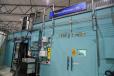
Publications and resources from the Powder Diffraction beamline.