
Group Manager - Spectroscopy
Dr Peter Kappen manages the Spectroscopy Group at the Australian Synchrotron.


Showing 21 - 40 of 59 results
Dr Peter Kappen manages the Spectroscopy Group at the Australian Synchrotron.

ANSTO User Meeting 2021 - Speakers
The 3D structure of a fungal and plant enzyme solves 50-year-old mystery.
Applications open for 2017 ANSTO Australian Synchrotron Stephen Wilkins Medal
Nominations are being accepted for the 2017 Stephen Wilkins medal for an outstanding thesis.
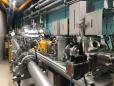
The Medium Energy- X-ray Absorption Spectroscopy beamlines provides access to XANES and EXAFS data from a bending magnet source, optimised for cutting-edge applications in biological, agricultural and environmental science in an energy range that is not currently available at the Australia Synchrotron.
Melbourne researchers map the structure of a key COVID-19 protein using the Australian Synchrotron

Read about an ANSTO scientist and their work to prepare for a school project or interview.

Protein found in tobacco plant can target and kill microorganisms,
Nuclear techniques will be crucial tools in the development of advanced materials that sustainably convert waste heat into useful forms of energy to benefit Australia.
Experiments at the Synchrotron enable researchers to produce a 3D structure of a molecular scaffold with role in cancer
Melbourne researchers have used the Australian Synchrotron to produce structure of molecule known to play a critical role in the development and spread of aggressive cancer.
Scientists from the Walter and Eliza Hall Institute (WEHI) are using the unique immune system of the alpaca and techniques at the Australian Synchrotron as part of research using antibodies to disrupt COVID-19 viral entry into cells.
The protein mapping workhorses of the Australian Synchrotron, Macromolecular and Microfocus crystallography beamlines, MX1 and 2, continue to support important biomedical research in the development of vaccines and new therapeutics.