Groundwater study
Using isotopes to understand saltwater intrusion of Rottnest Island groundwater


Showing 21 - 40 of 46 results
Using isotopes to understand saltwater intrusion of Rottnest Island groundwater
Young researcher accepted into the Australian Antarctic Science Program.
Imperial College London researchers tapped into ancient geological data locked within precariously balanced rocks using a new technique to boost the precision of hazard estimates for large earthquakes.
ANSTO has the capability to analyse heavy isotopes such as 129I, platinum group elements, 236U and Pu isotopes.

ANSTO has been tracking and publishing data on fine particle pollution from key sites around Australia, and internationally, for more than 20 years.
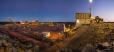
Using geoarchaeology to reconstruct the history of an ancient Khmer city.
Insights about Mayan Empire relevant for current climate challenges
Insights into the formation of deep river canyons mountain ranges in intra-tectonic plate areas by SAAFE Scholarship recipient and collaborators.
A rare collection of traditional Aboriginal wooden objects in varying degrees of preservation found along a dry creek bed in South Australia have been dated to a period spanning 1650 to 1830 at the Centre for Accelerator Science at ANSTO.
Ancient groundwater in Australia contributing carbon to food webs through surface water.
Participants undertook IAEA training hosted by Macquarie University and ANSTO on use of radionuclides for soil and water investigations.

The celebration of the UN’s International Women’s Day 2023 has a theme that highlights the power of innovative IT to combat discrimination and the marginalisation of women globally.
Radiocarbon analyses on corals from two sites in Australian waters of the southwest (SW) Pacific has indicated significant changes in ocean circulation in the Pacific and large climate variability during the early to mid-Holocene period (8,000-5,400 years ago).
Retrieving an Antarctic ice core more than a million years old presents challenges and opportunities.