

Showing 21 - 40 of 1113 results
New Magnetometer has arrived
Reports of vehicle crash near Gloucester NSW
New radiocarbon calibration curves for a better dating method
The technique of using radiocarbon to establish the age of artefacts and other samples as well as to provide insights on climate, has just been updated with the publication of the new radiocarbon curves.
Simulation of radiation damage assists prototyping a new self-healing solar cell for next generation of power in space
Researchers developing new materials and devices that can withstand the harsh radiation environment in space are using the unique ANSTO’s capability to simulate the effects of high-energy ion irradiation on the properties and performance of these materials and devices.
New beamline provides state-of-the-art imaging capability
The new Micro Computed Tomography (MCT) beamline is the first instrument to become operational as part of the $94 million Project BRIGHT program, which will see the completion of eight new beamlines at ANSTO’s Australian Synchrotron.

New Hope for Malaria Treatment: Hijacking the Parasite’s Protein Factory
Australia’s OPAL multi-purpose reactor prepares for new milestone
Routine transport of spent nuclear fuel
Collaborative research brings new insights into radioactive waste, nuclear fuel and nuclear waste forms
ANSTO researchers have demonstrated longstanding expertise in the study of nuclear fuel and radioactive waste with two recent journal articles in a special issue of Frontiers of Chemistry.
Building a new neutron reflectometer
A sparrow with 257 parts weighing more than 29 tonnes arrives safely at ANSTO
ANSTO provides groundwork for promising new nuclear medicine
Clarity Pharmaceuticals is building on comprehensive work on chelators carried out at ANSTO.
New insights into the fundamental behaviour of water
An international collaboration of researchers has used ANSTO's facilities to find something new about the properties one of the most fundamental everyday materials, water, and answered an important scientific question.
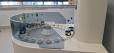
Enhancing characterisation capabilities at the NDF - New nuclear magnetic resonance (NMR) instrument
Collaboration develops new imaging protocol
Imaging protocol assesses molecular mechanism of work in the treatment of deadly childhood cancer neuroblastoma.
The multi-purpose reactor OPAL, now in its 20th year, is not a power reactor
Australia has one multi-purpose nuclear reactor, the Open Pool Light Water Reactor (OPAL) and it is not used to generate ‘nuclear power’.
What's new in nuclear power technologies
It's ANSTO's role to keep Australia across the very latest developments in nuclear science and technology from around the world. Part of this responsibility is keeping us abreast of the latest developments in nuclear power technologies.
Proposed new ANSTO waste facility
The independent nuclear regulator, ARPANSA, is currently accepting submissions about ANSTO’s planned $59.8 million Intermediate Level Solid Waste Storage Facility.
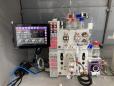
New flow chemistry capability to enhance NDF production capacity
$12.5 million for new jobs from ANSTO’s Innovation Precinct
The NSW Government will invest $12.5 million to support the expansion of the Innovation Precinct at the Lucas Heights campus of the Australian Nuclear Science and Technology Organisation (ANSTO).

New User Symposium 2025 Program
Timetable and Teams links