
Stable Isotope Analyst


Showing 21 - 40 of 137 results

The Infrared microspectroscopy microscopes can record spectra from a range of different samples; from thin microtomed sections to polished blocks and embedded particles. This section highlights the types of samples that can be analysed using the IRM beamline

Detailed data on ANSTO electricity use and CO2 emissions for FY2024 - FY2025
A collaboration of Australian scientists has used ANSTO’s Australian Synchrotron to measure the amount of carbon that is captured in microscopic seams of deep-sea limestone, which acts as a carbon sink.

Archive of ANSTO research publications, seminars and short talks.

Radiation can be described as energy or particles from a source that travel through space or other mediums. Light, heat, and wireless communications are all forms of radiation.
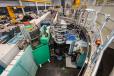
The instrument is designed to measure inelastic neutron scattering, or do neutron spectroscopy.
Indigenous Kakadu plum farmers attend workshop on use and application of the elemental fingerprint technology for indigenous bushfoods provenance.

ANSTO is dedicated to identifying opportunities for the application of knowledge and technology developed by the organisation for a wide range of industry applications.


ANSTO is a highly regulated organisation. Our governance system and processes provide critical guidance to effectively manage ANSTO’s activities. This section outlines the processes and systems that are in place to provide assurance to Government, our stakeholders and the community that we are working within our regulated and mandated requirements.
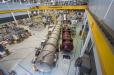
Proposals at the Australian Centre for Neutron Scattering and National Deuteration Facility.

Radioisotopes are widely used in medicine, industry, and scientific research. New applications for radioisotopes are constantly being developed.
Research has helped build a record of rainfall during the late Pleistocene and Holocene, and shed light on the strategies of Indigenous Australians to cope with a changing landscape.