

Showing 21 - 40 of 44 results
Innovative cancer research
An ANSTO radiochemist has been awarded a scholarship to carry out research at the world-renowned Sloan Kettering Cancer Center in New York.

Archive
Archive of ANSTO research publications, seminars and short talks.
Synroc: Australian innovation increases technology readiness for waste treatment plant
Fossils go nuclear
Sharing expertise with regional neighbours
Participants undertook IAEA training hosted by Macquarie University and ANSTO on use of radionuclides for soil and water investigations.
Jarosite on Earth and Mars
Useful in some mineral processes but a major problem in others, jarosite may be the key to unlocking the geological history and environmental context of water on Mars.
Innovative technology provides enhancement to advanced radiation therapy
Neutron Capture Enhanced Particle Therapy developed at ANSTO.

Advanced Diffraction & Scattering Beamlines (ADS-1 and ADS-2) UNDER CONSTRUCTION
The Advanced Diffraction and Scattering beamlines (ADS-1 and ADS-2) are two independently operating, experimentally flexible beamlines that will use high-energy X-ray diffraction and imaging to characterise the structures of new materials and minerals.
PET innovation
Tool developed for producing F-18 radiopharmaceuticals for PET imaging.
Synchrotron leader shines bright, becoming a Fellow of ATSE
The Australian Academy of Technology and Engineering (ATSE) has elected Professor Andrew Peele, Director of ANSTO’s Australian Synchrotron, to become a Fellow of the prestigious organisation.
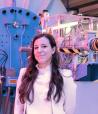
Irradiations Team Lead
Role at ANSTO

Australian access to overseas synchrotrons
The International Synchrotron Access Program (ISAP) is administered by the Australian Synchrotron and is designed to assist Australian-based synchrotron users to access overseas synchrotron related facilities.
Space research enabled with new capability
New high energy ion microprobe beamline supports space research on the effects of radiation on astronauts.
A closer look at the science of detecting flu

Emu - High-Resolution Backscattering Spectrometer
Theinstrument is typically used to study diffusing water molecules or yet larger molecules like polymers or biological molecules. In addition, Emu can reveal quantum-mechanical tunnelling.
Join ANSTO for a sensational week of science fun online
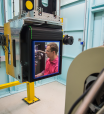
High Performance Macromolecular Crystallography Beamline (MX3)
The High Performance Macromolecular Crystallography beamline will enable the study of very small (sub-5 micrometre) or weakly diffracting crystals, providing a state-of-the-art high-throughput facility for researchers. MX3 will be able to study the structures of large proteins and protein complexes for virology, drug design and industrial applications via goniometer mounted crystals, in-tray screening, or via serial crystallography methods.
The risks posed by stormwater runoff can be monitored with thin-film technology
A large collaboration of Australian and New Zealand researchers has established that a thin film technology can be used to monitor stormwater effectively and provides a way to translate the presence of metal contaminants into potential risks to aquatic ecosystems.