Search hero banner

Search results

Showing 21 - 38 of 38 results

Understanding the full impact of radiation on astronauts

Understanding the full impact of radiation on astronauts

In space, without the protection of the magnetosphere, the type and dose of radiation is considerably different to what is naturally experienced on earth. However, it is the secondary particles of lower energies created when galactic and cosmic radiation interacts with shielding that is of concern for astronauts.
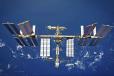
International Space Station

Understanding the full impact of radiation on astronauts

In collaboration with the French National Institute of Health and Medical Research (INSERM) and the French International Space Agency (CNES), ANSTO scientists are undertaking research on the radiobiological effects of secondary particles that are created when radiation interacts with the shielding on the International Space Station.

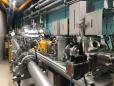
MEX Hutch A

Medium Energy X-ray Absorption Spectroscopy Beamline (MEX-1 and MEX-2)

The Medium Energy- X-ray Absorption Spectroscopy beamlines provides access to XANES and EXAFS data from a bending magnet source, optimised for cutting-edge applications in biological, agricultural and environmental science in an energy range that is not currently available at the Australia Synchrotron.

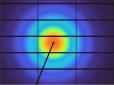
BioSAXS

Biological small angle X-ray scattering beamline (BioSAXS)

The Biological Small Angle X-ray Scattering beamline will be optimised for measuring small angle scattering of surfactants, nanoparticles, polymers, lipids, proteins and other biological macromolecules in solution. BioSAXS combines combine a state-of-the-art high-flux small angle scattering beamline with specialised in-line protein purification and preparation techniques for high-throughput protein analysis.

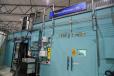
Hutch B

Publications

Publications and resources from the Powder Diffraction beamline.

Archive of publications 2017 and prior

Archive

Archive of ANSTO research publications, seminars and short talks.

Pagination