Food origin research in global spotlight at Expo 2025 Osaka
ANSTO highlighted its food origin research with live shows and an expert panel discussion to showcase Australian science in the Australia Pavilion at the Expo 2025 Osaka from 8-10 October.


Showing 201 - 220 of 609 results
ANSTO highlighted its food origin research with live shows and an expert panel discussion to showcase Australian science in the Australia Pavilion at the Expo 2025 Osaka from 8-10 October.
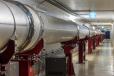
The Imaging and Medical beamline (IMBL) is a flagship beamline of the Australian Synchrotron built with considerable support from the NHMRC. It is one of only a few of its type, and delivers the world’s widest synchrotron x-ray ‘beam’.
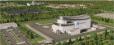
Nuclear power is used as a reliable and clean energy solution in most OECD countries and many other parts of the world. Although it is banned in Australia, a number of government reviews are looking at current prohibitions on nuclear power.
Australia part of global renaissance in fusion power research symbolised by ITER experiment
Publications and resources from the Powder Diffraction beamline.
In mid-February ANSTO attended a meeting at the International Atomic Energy Agency (IAEA) to discuss and produce recommendations for the development of a new Coordinated Research Project (CRP) on Seafood Origin and Authenticity using Nuclear and Related Technologies to progress the IAEA flagship initiative Atoms4Food.
Lithium Australia, a company that has a close association with ANSTO’s business unit Minerals, has been awarded a US patent for its unique lithium mining technology SiLeach®.
Rare earth elements will be a key area of focus for the Australian Nuclear Science and Technology Organisation’s Minerals unit as it welcomes a $13.9 million funding allocation under the Australian Critical Minerals Research and Development Hub
Atmosphere scientists find link between indigenous weather knowledge and Sydney air pollution.

ANSTO User Meeting 2021 - Speakers

More than 3,200 solar panels have been installed across the rooftops of the Australian Nuclear Science and Technology Organisation’s (ANSTO) Australian Synchrotron in Clayton, offsetting enough power to light up the whole MCG for more than five years.

The new facility will be built around a product line of ANSTO’s design – a new Technetium-99m generator – that will enable greater process automation than is possible with existing technology, leading to improvements in efficiency, quality and importantly the highest levels of production safety.
Whilst at ANSTO’s Australian Synchrotron today, Prime Minister Scott Morrison announced new funding for the Australian Precision Medicine Enterprise (APME) Project. The Australian Government will contribute $23m in grant funding under the Manufacturing Collaboration Stream of the Modern Manufacturing Initiative (MMI) towards the $71.2m project.