
Highlights - Planetary Materials
Planetary science is an emerging research theme in Australia, and research at ANSTO is embedded in the heart of this.


Showing 2021 - 2040 of 2753 results
Planetary science is an emerging research theme in Australia, and research at ANSTO is embedded in the heart of this.
ANSTO is proud to announce that a license has been issued by the Therapeutic Goods Administration to produce Lutetium-177 (Lu-177) for use in clinical trials.

Spatz neutron reflectometer becomes 15th neutron scattering instrument that is used for studies of biological materials and other soft matter.
Senior electronics engineer from SESAME visits following donation of instrumentation to the Middle East's synchrotron in Jordan.
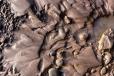
X-ray fluorescence scanner is a powerful analytical tool for environmental studies.
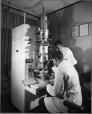
Participate in live radiation demonstrations, cover syllabus content and visit ANSTO virtually during our online depth study classes for Year 12 Investigating Science.
- Participate in live demonstrations of the properties of radiation, shielding and technologies used to detect radiation.
- Learn about the OPAL multipurpose reactor, the use of nuclear medicine and their impact on society.
- Discuss the public perception of nuclear science and the regulation of scientific research.
Cost: $90 per class.
A specialist in particle therapy treatment planning from the Mayo Clinic in the US, Professor Chris Beltran, recently visited ANSTO for an exchange for information.
ANSTO has contributed to work by scientists from the Tokyo Institute of Technology on a promising proton conductor for next-generation ceramic fuel cells.
The National Deuteration Facility has supported industry through the synthesis of deuterated mineral oil, which was supplied to Japanese chemical manufacturer Mitsui Chemicals. Mitsui Chemicals specialises in polymeric materials for packaging, appliances, construction and other applications.
Research undertaken to understand ancient record of algal blooms
A large international research team led by Academia Sinica in Taiwan investigated how heat is transferred in an advanced thermoelectric material made with germanium (Ge) and tellurium (Te) and doped with antimony (Sb). These devices are used to power space probes such as the Mars Curiosity Rover.
Access to a ‘window into the cell’ with University of Wollongong cryogenic electron microscope at ANSTO.
ANSTO has hosted its second IAEA Practical Introduction to Nuclear Forensics Regional Training Course for representatives of member countries from South-East Asia, sharing expertise on the theoretical and practical aspects of nuclear forensics to respond to incidents of nuclear or other radioactive material out of regulatory control.
ANSTO’s National Deuteration Facility has provided deuterated cholesterol for international research to gain a better understanding of how the Spike protein of the COVID virus, SARS-Co-V-2, infects human cells through a membrane fusion mechanism.

Following your experiment at the Australian Synchrotron there are certain tasks that users can complete including a user feedback survey and claiming reimbursement for travel expenses.
Australian Centre for Neutron Scattering succcess at 2017 awards