Distinguished Research Scientist


Showing 221 - 240 of 535 results
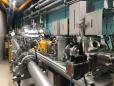
The Medium Energy- X-ray Absorption Spectroscopy beamlines provides access to XANES and EXAFS data from a bending magnet source, optimised for cutting-edge applications in biological, agricultural and environmental science in an energy range that is not currently available at the Australia Synchrotron.

Are you a school student who likes a creative challenge? Enter our new Incredible Insects Competition during the month of July 2021! You could win yourself a prize pack worth over $100! School students from all States/ Territories of Australia are invited to enter.

Research can improve both food processing and food product development.


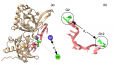
The Scientific Computing team supports researchers by performing numerical simulations that complement experimental research. In particular, we use state-of-the-art software to perform computational quantum mechanical modelling, molecular dynamics simulations, lattice dynamics calculation, data analysis and visualisations.

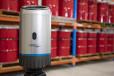
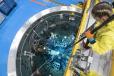

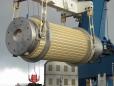
Combining scientific expertise with more than $1.3 billion in unique operational assets to provide optimal radioactive waste solutions.


(ANSTO) has welcomed the launch of the new National Science Statement and revitalised National Science and Research Priorities by Minister for Industry and Science, The Hon Ed Husic MP and Australia’s Chief Scientist, Dr Cathy Foley AO PSM.
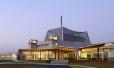
The OPAL research reactor's design and integrated safety features mean it is extremely safe; a fact confirmed by independent analysis.