


Showing 221 - 240 of 361 results

Manager, Irradiations Group
Role at ANSTO

Lead Scientist - Advanced Diffraction & Scattering beamlines
Role at ANSTO

Data analysis developer
Role at ANSTO

2023 Think Science Competition Summary and Results
Think Science! 2023 Summary and Results
Collaborative research brings new insights into radioactive waste, nuclear fuel and nuclear waste forms
ANSTO researchers have demonstrated longstanding expertise in the study of nuclear fuel and radioactive waste with two recent journal articles in a special issue of Frontiers of Chemistry.
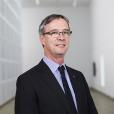
Director Australian Synchrotron
Role at ANSTO
An unambiguous message of support for carbon capture: a new ARC Centre of Excellence
The ARC Centre of Excellence (CoE) for Green Electrochemical Transformation of Carbon Dioxide, GETCO2, will support innovative approaches to carbon capture.
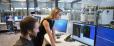
Careers at ANSTO
ANSTO seeks candidates who are passionate about making a contribution to Australian society through supporting nuclear science and technology.
ANSTO supports investigations into new area of COVID research
ANSTO’s National Deuteration Facility has been providing high-quality deuterated lipids used in the construction of cell membrane models to support research that improves our understanding of how the virus interacts with elements of the cell membrane, a relatively new area of investigation.
Advancing particle therapy
Meeting of minds about potential next-generation cancer treatment for Australians
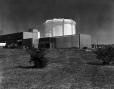
Our History
In April 15, 1953, Australia entered the nuclear science arena, when the Atomic Energy Act came into effect. The Australian Atomic Energy Commission (AAEC) followed and in 1987 the AAEC evolved into the Australian Nuclear Science and Technology Organisation (ANSTO) as it’s known today.
International collaboration to develop better nuclear fuels and materials
The history of ANSTO began 70 years ago with the Atomic Energy Act 1953
Dharawal mural and sign unveiled
Dharawal Mural tells an ancient story. Aboriginal and Torres Strait Islander viewers are advised that webpage contains images of people who have died.
Research highlights importance of traditional fire burning practices to ensure survival of tree with Indigenous cultural and ecological significance
Radiocarbon dating at ANSTO’s Centre for Accelerator Science provided strong evidence that some culturally significant trees on Minjerribah (North Stradbroke Island) have persisted for up to more than 500 years

Access to information

Radiotracer Methods and Organic Chemistry Task Leader
Role at ANSTO
Archive
See details of previously published customer updates from our Health products team.
Advanced Diffraction & Scattering Beamlines (ADS-1 and ADS-2) UNDER CONSTRUCTION
The Advanced Diffraction and Scattering beamlines (ADS-1 and ADS-2) are two independently operating, experimentally flexible beamlines that will use high-energy X-ray diffraction and imaging to characterise the structures of new materials and minerals.