Services - Koala
Sample environments, Data analysis and reduction on the Koala instrument.


Showing 241 - 260 of 289 results
Sample environments, Data analysis and reduction on the Koala instrument.
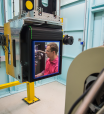
The High Performance Macromolecular Crystallography beamline will enable the study of very small (sub-5 micrometre) or weakly diffracting crystals, providing a state-of-the-art high-throughput facility for researchers. MX3 will be able to study the structures of large proteins and protein complexes for virology, drug design and industrial applications via goniometer mounted crystals, in-tray screening, or via serial crystallography methods.

Jacob is currently an engineering & Physics intern working with the Australian centre for neutron Scattering (ACNS) here at Ansto. He is a third-year engineering Mechatronics student and final year physics student at QUT up in Brisbane.
Investigators from UNSW and ANSTO have provided insights into the dynamic interactions of atoms in a promising material for sodium-ion batteries.

Highlights of the Energy Materials Project.
ANSTO scientists were members of an inter-disciplinary team led by the University of Sydney, who examined six 19th century West African swords, using a non-invasive multi-methodological approach to reveal the composition and manufacturing history of the iron implements.
Combined users meeting highlights how ANSTO expertise and infrastructure can assist research community.
ANSTO has contributed to research on a novel therapeutic option for combatting antimicrobial-resistant Gram-negative bacteria, known as superbugs.
ANSTO to receive a new grant to continue to fight chronic kidney disease killer in Sri Lanka.
ANSTO researchers have demonstrated longstanding expertise in the study of nuclear fuel and radioactive waste with two recent journal articles in a special issue of Frontiers of Chemistry.
Useful in some mineral processes but a major problem in others, jarosite may be the key to unlocking the geological history and environmental context of water on Mars.
Research confirms that methylcellulose, one of the most widely used hydrogel-forming materials in biomedical research and consumer products, organises itself into a structural architecture
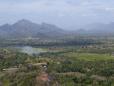
In 2017, ANSTO's CEO signed a Memorandum of Understanding with Sri Lanka to work together to investigate the epidemiology of Chronic Kidney Disease of unknown origin (CKDu).
A large international team led by scientists from the Institute for Superconducting and Electronic Materials at the University of Wollongong has verified that the introduction of novel molecular orbital interactions can improve the structural stability of cathode materials for lithium-ion batteries.
The celebration of the UN’s International Women’s Day 2023 has a theme that highlights the power of innovative IT to combat discrimination and the marginalisation of women globally.
Materials researcher with a passion for chemistry, Matthew Teusner is investigating lithium sulfur materials to support the next step in cleaner battery power.