Careers at ANSTO
ANSTO seeks candidates who are passionate about making a contribution to Australian society through supporting nuclear science and technology.


Showing 241 - 260 of 861 results
ANSTO seeks candidates who are passionate about making a contribution to Australian society through supporting nuclear science and technology.
Nuclear engineer, Robert Mardus-Hall, with his research partner Andrew Pastrello, are developing nuclear power based solutions for space missions to the Moon and Mars.
On 20 July 1969, humans landed on the moon for the very first time. As Neil Armstrong was lowered onto the surface of the moon he made the now infamous statement, “That's one small step for man, one giant leap for mankind”.
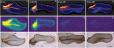
The use of radioisotopes, radiolabeled molecules and radioactive particles in conjunction with a range of quantitative imaging spectroscopy and radiation counting methods.
National Science Week is a time to celebrate science and the important role national science agencies like ANSTO play in delivering outcomes that benefit all Australians.
Updated results show radiation therapy using lutetium-177 improved survival in advanced prostate cancer.
ANSTO is proud to announce that a license has been issued by the Therapeutic Goods Administration to produce Lutetium-177 (Lu-177) for use in clinical trials.
Scandium 47, a therapeutic radioisotope and potential theranostic, has been produced for the first time at ANSTO. Theranostics are used to both diagnose and treat disease.

Detailed data on ANSTO electricity use and CO2 emissions for FY2024 - FY2025
On the 10th of October 2025, the Minister for Industry, Science and Technology provided his Statement of Expectations to ANSTO.
The celebration of the UN’s International Women’s Day 2023 has a theme that highlights the power of innovative IT to combat discrimination and the marginalisation of women globally.
Paper on redefinition of the kilogram receives international award
ANSTO participates in nuclear medicine congress
The Biosciences team undertakes the radiolabelling of chemical, biochemical. biological or material vector for the purpose of radiotracing in living systems.