How safe is OPAL?
The OPAL research reactor's design and integrated safety features mean it is extremely safe; a fact confirmed by independent analysis.


Showing 261 - 280 of 332 results
The OPAL research reactor's design and integrated safety features mean it is extremely safe; a fact confirmed by independent analysis.

ANSTO’s user office in Melbourne offers access to the Australian Synchrotron, a world-class research facility with over 4,000 user visits per year. ANSTO seeks collaboration and partnerships with research organisations, scientific users and commercial users.

As a Consultant Health Physicist within ANSTO’s Radiation Services team, Bronte brings her experience in the field of radiation detection and protection to support the development and delivery of complex programs in a commercially focu
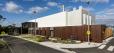
ANSTO's Mo-99 manufacturing facility secures Australia’s ability to produce Mo-99 to meet current and future domestic demand and provide a significant proportion to support global demand.
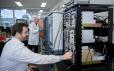
ANSTO has responsibilities mandated by the Australian Government for the maintenance of the national measurement standard for radioactivity.
Five exceptional female science communicators are part of a larger team who use skills in education and engagement to promote an interest in science amongst the public and students.

ANSTO announces the recipients of the 2022 organisational awards
ANSTO recently re-started the OPAL Reactor after a six-month shutdown for essential maintenance and the installation of an upgraded facility.
Environmental scientist with a passion for fieldwork and a lifelong commitment to scientific excellence

An international team of academic researchers led by Curtin University have provided a description of a new species of pterosaur, a flying reptile.

Australian-first detector to accelerate cancer research unveiled.
Two ANSTO physicist explain the three-body problem as featured in science fiction series of the same name

Jasmine Reay is an Executive Leader with 25 years of experience in infrastructure and engineering projects across diverse sectors, including civil and infrastructure, renewable energy, water, airports, universities, building, and residential prope

Marianne has been at ANSTO since August 2018 and has overseen the Information Digital Services (IDS) group during this time.