
Social media terms of engagement
Creating a safe, inclusive and respectful online community for all.


Showing 301 - 320 of 796 results
Creating a safe, inclusive and respectful online community for all.
Research is being undertaken through an Australian Research Council Discovery Project "Reconstructing Australia’s fire history from cave stalagmites", led by Professor Andy Baker at UNSW Sydney and Dr. Pauline Treble at ANSTO. The project aims to calibrate the fire-speleothem relationship and develop coupled fire and climate records for the last millennium in southwest Australia.

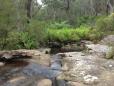
ANSTO undertakes a rigorous environmental monitoring program and shares expertise nationally and internationally.
A dedicated team of radiation specialists from the Australian Nuclear Science and Technology Organisation (ANSTO) are behind the successful detection and rapid retrieval of a missing radioactive source in outback Western Australia.

ANSTO works in partnerships and collaborative ventures with national and international organisations. Partner with ANSTO.
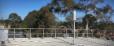
ANSTO continually monitors environmental gamma radiation from a station located in Engadine NSW. ANSTO uses environmental radiation data to evaluate atmospheric dispersion from its site. This radiation is almost completely natural background radiation.
German ambassador visits to see a ‘sparrow’ being assembled.
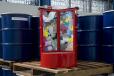
ANSTO has safely managed its radioactive waste for over 60 years. Waste is managed in accordance with national and international standards.

Dr Inna Karatchevtseva, who collaborates with DMTC, was among those identified by The Australian in its Research magazine as a national leader in her field of ceramic engineering
A rare collection of traditional Aboriginal wooden objects in varying degrees of preservation found along a dry creek bed in South Australia have been dated to a period spanning 1650 to 1830 at the Centre for Accelerator Science at ANSTO.
An Australian-led international research team, including a core group of ANSTO scientists, has found that doping a promising material provides a simple, effective method capable of extracting uranium from seawater.
A team of Melbourne researchers and international partners from Italian Instituto Nazionale de Fisica Nucleare (INFN) and CERN, who are developing radiation-hardened semiconductor chips, used the unique state-of-art high energy ion microprobe on the SIRIUS ion accelerator at ANSTO’s Centre for Accelerator Science to test a prototype radiation-resistant computer chip
Radiation testing of electronic components at ANTO could benefit the aviation industry, regulators and most importantly, passengers as solar radiation events increase.