
Frequently Asked Questions
Frequently asked questions about the ANSTO Security Process, travel funding, ANSTO Research Portal and ACNS Customer Portal.


Showing 301 - 320 of 1414 results
Frequently asked questions about the ANSTO Security Process, travel funding, ANSTO Research Portal and ACNS Customer Portal.
The process by which plastic degrades in the ocean facilitates its entry into the natural carbon cycle efficiently as carbon dioxide.
ANSTO’s OPAL multi-purpose research reactor at Lucas Heights has officially returned to power and recommenced operations, following a months-long planned shutdown to carry out essential maintenance and upgrades.
Atmosphere scientists find link between indigenous weather knowledge and Sydney air pollution.
The Australian Nuclear Science and Technology Organisation (ANSTO) has joined a team, lead by the US Department of Energy’s Pacific Northwest National Laboratory (PNNL), to install a high resolution monitoring system at ANSTO’s medical isotope production facility in Lucas Heights, Australia.


The new facility will be built around a product line of ANSTO’s design – a new Technetium-99m generator – that will enable greater process automation than is possible with existing technology, leading to improvements in efficiency, quality and importantly the highest levels of production safety.
ANSTO is contributing to key critical minerals projects funded by the Federal Government.
A new continuous record of temperature dating back 12,000 years provides an import resource in understanding current and future climate changes,
Modelling and experimentation - a powerful combination in probing mechanical properties of ion irradiated materials through nanoindentation.

ANSTO offers a broad range of programs and services to various industries and customers. Many of these services, including the Australian Nuclear Medicine Traceability program, are supported by online customer portals.
A team of researchers including the University of Rochester, CSIRO and ANSTO has found methane emissions from human fossil sources have been greatly underestimated.

Publications, posters and conference presentations for fire impacts reconstructed from a southwest Australian stalagmite.
Rare earth elements will be a key area of focus for the Australian Nuclear Science and Technology Organisation’s Minerals unit as it welcomes a $13.9 million funding allocation under the Australian Critical Minerals Research and Development Hub
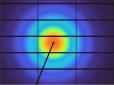
The Biological Small Angle X-ray Scattering beamline will be optimised for measuring small angle scattering of surfactants, nanoparticles, polymers, lipids, proteins and other biological macromolecules in solution. BioSAXS combines combine a state-of-the-art high-flux small angle scattering beamline with specialised in-line protein purification and preparation techniques for high-throughput protein analysis.

Low-cost X-ray detectors featuring high sensitivity, durability and physical flexibility are required in fields ranging from medical imaging to defence. In this study, a new material for X-ray detection was coupled with inkjet printing to produce a series of prototype X-ray detectors.