

Showing 321 - 340 of 374 results
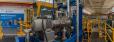
ANSTO Synroc® Treatment Facility
ANSTO Synroc® is constructing an Australian radioactive waste treatment facility for the by-products of Molybdenum-99 (Mo-99) production.
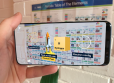
Periodic table photo competition results
This science week ANSTO (August 10th - 18th) is running a classroom competition using the ANSTO Periodic Table and our new ANSTO XR app.
ANSTO'S National Science Week Hackathon 2024

Are you PFAS compliant?
PFAS chemicals in packaging pose serious environmental and health risks, but Australia’s packaging industry is leading the way to phase them out. Backed by cutting-edge nuclear science, industry-led action is creating safer packaging solutions for all Australians.
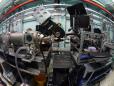
Technical information - SAXS / WAXS
Technical information on the SAXS / WAXS beamline at the Australian Synchrotron.
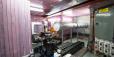
Infrastructure - Cultural Heritage
In Australia and the Southeast Asia basin, the ANSTO facility offers a wide range of unique nuclear-beam techniques for cultural heritage research.
Scientists untangle the challenging complexities of radiocarbon in ice cores
Research elucidates how in situ cosmogenic radiocarbon is produced, retained and lost in the top layer of compacting snow (the ‘firn layer’) and the shallow ice below at an ice accumulation site in Greenland.
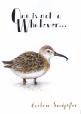
Shorebirds Competition 2021
ANSTO is proud to host the Shorebirds Competition for the fourth year. This unique environmental poster competition is free to enter and offers over $4000 in prizes (insert link to prizes button) for students and schools!
Shorebirds Competition 2022
ANSTO is proud to host the Shorebirds Competition for the fifth year. This unique environmental poster competition is free to enter and offers over $4500 in prizes for students and schools!

Online learning
Discover the amazing world of nuclear science from your classroom. Join us for Meet an Expert, Nuclear Science Inquiry Skills, Junior Science, and Online Depth Study sessions for Chemistry, Physics and Investigating Science.
Critical minerals
2020 Shorebirds Competition Summary and Results
Primary students across Australia were invited to create a public awareness poster for a threatened shorebird found in Australia for our 2020 Shorebirds Competition. In response to COVID-19, and the changes to children’s learning environments, we opened the competition early and also included categories for individual children to enter, as well as school children.
Community FAQs
Frequently asked questions about ANSTO for the community.
Facilities
ANSTO has a full suite of mineralogical, chemical and hydrometallurgical facilities from laboratory through to pilot scale.
ANSTO's Gentech® Generator
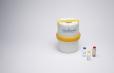
Supporting healthcare professionals in Australia with easy-to-access resources related to ANSTO’s Gentech® Generator.
Waste treatment case studies
Big Ideas
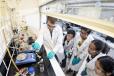
ANSTO Big Ideas encourages students to creatively communicate the work of an Australian scientist, and explain how their work has inspired them to come up with a Big Idea to make our world a better place. This competition is intended to engage and support Australian students in years 7-10 in Science and encourage them to pursue studies and careers in STEM.
Feathery moa’s fossilised footprints, ancient age revealed
ANSTO scientist, Dr Klaus Wilcken of the Centre for Accelerator Science, used cosmogenic nuclide dating to determine the ages of layered sand and gravel samples, in which seven footprints of the flightless bird, the moa, were found on the South Island in New Zealand in 2019.
Introducing CORIS360® 2.0
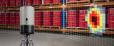
CORIS360 delivers fast, accurate radiation detection and imaging, making invisible radiation visible to improve safety and decision making in radioactive environments.