Eliza is currently taking part in the ANSTO graduate program, in which she will complete her four six-month rotations in different research areas. Eliza has worked in Radiopharmaceutical Development, Minerals, and Environment so far.

Showing 321 - 340 of 928 results
Plans continue to repatriate medical and research radioactive waste
Australia’s nuclear agency ANSTO is continuing to lead planning efforts to repatriate what is called a TN-81 cask of intermediate-level radioactive from the United Kingdom in 2022.
Revealing the sources of Sydney’s air pollution
Scientific expertise
The scientific and technical staff at the Centre for Accelerator Science have a comprehensive range of skills and abilities in the operation of accelerator instruments and techniques,
Radiation Monitoring
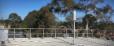
ANSTO continually monitors environmental gamma radiation from a station located in Engadine NSW. ANSTO uses environmental radiation data to evaluate atmospheric dispersion from its site. This radiation is almost completely natural background radiation.
Temperature
Our temperature sample environments include closed cycle refrigerators, cryofurnaces, cryostates, furnaces, rapid thermal devices, temperature baths and low temperature inserts.
Air Quality
Research to detect and measure air pollution, the composition the atmosphere and mixing in the atmosphere.
New capability supports advanced laser additive manufacturing
Neutrinos, atomic clocks and an experiment to detect a time dilation
Griffith University researchers are conducting an experiment at ANSTO that will test a revolutionary physics theory that time reversal symmetry-breaking by neutrinos might cause a time dilation at the quantum scale.
70 years of scientific excellence has brought significant benefits to Australia
ANSTO is a unique national science organisation that began operating under its predecessor The Australian Atomic Energy Commission (AAEC) 70 years ago.
Corporate Publications
Explore ANSTO's range of publications and reports available for the public.
Radiation biology
The measurement and manipulation of radiation and radioactive materials within biological systems. Capabilities include access to a range of radioisotopes, gamma/X-ray sources and a selection of X-ray beams, ion beams and neutron beams for irradiation.
Groundwater study
Using isotopes to understand saltwater intrusion of Rottnest Island groundwater
Partnerships
ANSTO works in partnerships and collaborative ventures with national and international organisations. Partner with ANSTO.
Students tackle a real-world challenge regarding dissimilar-metal corrosion in a project supported by BlueScope
Biological small angle X-ray scattering beamline (BioSAXS)
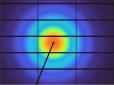
The Biological Small Angle X-ray Scattering beamline will be optimised for measuring small angle scattering of surfactants, nanoparticles, polymers, lipids, proteins and other biological macromolecules in solution. BioSAXS combines combine a state-of-the-art high-flux small angle scattering beamline with specialised in-line protein purification and preparation techniques for high-throughput protein analysis.
Advanced reactors
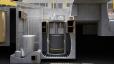
Advanced nuclear reactors, such as molten salt-based reactors and very high-temperature reactors provide a viable option within a future mix of energy systems.
Accelerate your battery development
We understand that electrochemistry, electrode design and failure modes of your battery system are going to determine your design and research decisions.
Benefits of nuclear science
ANSTO uses nuclear research techniques to address many of the important issues of our time relating to the environment, human health and industry.
Phoebe joined Taronga as part of the Wildlife Hospital team in 2012, where she developed a research interest in conservation forensics, leading an international project developing forensic tools to help save the world’s most hea