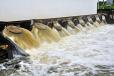
Removal of dangerous contaminants from dirty water
A group from Monash university has sought to make a new innovative nano-porous sieve material which has the potential to be produced on a global scale and is effective for a much longer time.


Showing 341 - 360 of 2687 results
A group from Monash university has sought to make a new innovative nano-porous sieve material which has the potential to be produced on a global scale and is effective for a much longer time.
Griffith University researchers are conducting an experiment at ANSTO that will test a revolutionary physics theory that time reversal symmetry-breaking by neutrinos might cause a time dilation at the quantum scale.
Experiments undertaken at the Australian Synchrotron have allowed research teams from Monash University and La Trobe University to clarify fundamental aspects of T-cell activation crucial to the body’s immune response to disease.
In 2023 we’re celebrating the 70th Anniversary since Australia began developing our nation’s Australia’s nuclear capabilities.
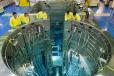
Nuclear science is applied by ANSTO's scientists in many areas that are vital to Australia's future, including agriculture, industry and manufacturing, minerals construction, health and environment. Our work in the development and applications and new knowledge and skills arises from world-class experience in nuclear science and technologies.
ANSTO groundwater experts have collaborated with the NSW Department of Planning, Industry and Environment on a comprehensive survey of groundwater resources in the state.
ANSTO and the National University of Singapore have signed an agreement to enable Singapore researchers to access ANSTO’s state-of-the-art beamline facilities at the Australian Synchrotron.
Protein found in tobacco plant can target and kill microorganisms,
A collaboration of scientists from RMIT, ANSTO and the CSIRO has published pioneering research that brings new insights into intrinsically disordered proteins and protein regions (IDPs)/ (IDRs) and how they behave under various physiological processes.
Radiocarbon analyses on corals from two sites in Australian waters of the southwest (SW) Pacific has indicated significant changes in ocean circulation in the Pacific and large climate variability during the early to mid-Holocene period (8,000-5,400 years ago).