Kimberley rock art dating project
Research will change understanding of Australian Aboriginal rock art found in rock shelters of the Kimberley and its relationship to a changing landscape


Showing 341 - 360 of 394 results
Research will change understanding of Australian Aboriginal rock art found in rock shelters of the Kimberley and its relationship to a changing landscape
A pioneering study led by Professor Junpei Yamanaka of Nagoya City University and an international team that included ANSTO has delivered transformative insights into the behaviour of colloidal particles under microgravity.
An article in Nature Geosciences has highlighted the power of synchrotron techniques to reveal the inner workings of volcanic systems that could potentially help with predictions of eruptions.
MABI instrument can determine both the concentration and source of black carbon pollution in the atmosphere.
ANSTO, Australia’s knowledge centre for nuclear science and technology, connects STEM graduates with industry to work on real-world challenges through its FutureNow Scholarships for 2022.
The new trilateral security partnership between Australia, the UK and the US (AUKUS) is a historically significant development for nuclear science and technology in Australia.

The most important data from NASA’s first crewed Artemis mission may not be its photographs, but the radiation measurements that will shape how humans work and survive beyond travel farther from Earth’s magnetic shelter safely.

Shorebirds Competition 2021 results.

ANSTO's procurement policy is closely aligned with the Commonwealth Procurement Guidelines and makes use of the Australian National Audit Office guidelines on ethics, accountability and transparency.
ANSTO facilitating coordinated effort to find the nexus that leads to chronic kidney disease of unknown origin
His Excellency General the Honourable David Hurley AC DSC (Retd), Governor-General of the Commonwealth of Australia and Her Excellency Mrs Linda Hurley visited ANSTO’s Innovation Centre nandin and several facilities including the OPAL multipurpose reactor this week for a tour after learning of the ANSTO-nandin win in the NASA SpaceApps COVID 19 Challenge.
New oxygen ion conducting material for use in solid oxide fuel cells and other devices
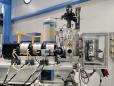
The high-energy heavy-ion microprobe is used for the characterisation or modification of material properties at depths from approximately 1 micrometre to maximum depths of up to 500 micrometres from the material surface.


Access to a ‘window into the cell’ with University of Wollongong cryogenic electron microscope at ANSTO.
Best and brightest recognised in 2017 research awards