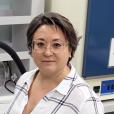
Material scientist
Role at ANSTO
Dr Inna Karatchevtseva undertakes work at ANSTO in two main areas: defence industry research and fundamental materials research.


Showing 341 - 360 of 1694 results
Dr Inna Karatchevtseva undertakes work at ANSTO in two main areas: defence industry research and fundamental materials research.
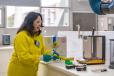
ANSTO has collaborated on a study assessing the impact of the commonly-used food additive titanium dioxide (TiO2) on gut microbiota and inflammation.
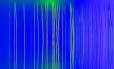
Below lists some useful programs for data reduction, search matching, analysis and structure visualisation of diffraction data.
Using geoarchaeology to reconstruct the history of an ancient Khmer city.
Dharawal educator Fran Bodkin has spent a good part of her eighty plus years, studying or sharing information about the therapeutic and nutritional properties of traditional indigenous plants and wildlife.
It's ANSTO's role to keep Australia across the very latest developments in nuclear science and technology from around the world. Part of this responsibility is keeping us abreast of the latest developments in nuclear power technologies.
Being in her final year of Masters of Design at Swinburne University, Pratibha started her journey as a Lifestyle Product designer. With an itch of curiosity, she has been expanding her knowledge base into multiple areas of design.
Role at ANSTO
View the upcoming proposal deadlines for access to ANSTO’s Research Portal. The User Office provides support for research proposals and enables you to leverage our world-class research infrastructure and facilities.
Neutron Capture Enhanced Particle Therapy developed at ANSTO.
Australia assists in the collection of marine sediments to support contaminant quality control measures by IAEA.
Guide to successful proposals and experiments at the Powder Diffraction beamline.
ANSTO to ensure ultra-low radiation environment in newly-funded Stawell Underground Physics Laboratory.
Research is being undertaken through an Australian Research Council Discovery Project "Reconstructing Australia’s fire history from cave stalagmites", led by Professor Andy Baker at UNSW Sydney and Dr. Pauline Treble at ANSTO. The project aims to calibrate the fire-speleothem relationship and develop coupled fire and climate records for the last millennium in southwest Australia.

The need for a smaller, more transportable version of ANSTO’s 1500-litre atmospheric radon-222 monitor, and with a calibration traceable to the International System of Units, prompted the team to develop a 200-litre radon monitor that would meet those needs.