Making science accessible to everyone: new initiative for the Deaf community
ANSTO was proud to support the first science-themed AuslanX event for the greater Sydney Deaf community during National Science Week.


Showing 361 - 380 of 990 results
ANSTO was proud to support the first science-themed AuslanX event for the greater Sydney Deaf community during National Science Week.
Investigators have verified and quantified the relationship between the Earth’s land biosphere and changes in temperature and provided evidence that temperature impacts the cycling of carbon between land, ocean and the atmosphere.
Radiocarbon dating of mud wasp nests was used as an indirect method of dating the Gwion Gwion style.
ANSTO’s OPAL multi-purpose research reactor at Lucas Heights has officially returned to power and recommenced operations, following a months-long planned shutdown to carry out essential maintenance and upgrades.
Senior electronics engineer from SESAME visits following donation of instrumentation to the Middle East's synchrotron in Jordan.
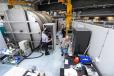
The Platypus instrument can be used to study all-manner of surface-science and interface problems, particularly related to magnetic recording materials and for polymer coatings, biosensors and artificial biological membranes.

Following your experiment at the Australian Synchrotron there are certain tasks that users can complete including a user feedback survey and claiming reimbursement for travel expenses.
Research on lunar meteorite and moon crater analogues coincides with Science Week.
A Powerhouse exhibition was recognised with a prestigious Museums and Galleries National Award for Research at a ceremony in Perth this morning. The Invisible Revealed exhibition was organised in collaboration with ANSTO and the University of NSW.
Dr Richard Garrett featured on an ABC National program that highlighted how far we are from a future with nuclear fusion energy. Image: Jamison Daniel, Oak Ridge Leadership Computing Facility
Two early career nuclear scientists who received international scholarships have spent time in the Nuclear Fuel Cycle group at ANSTO are making progress on their work to improve nuclear fuel.
Stable, highly conductive 2D nanosheets of boron nitride promising new material.

Research to characterise how radioactive contaminants impact the surrounding environment.
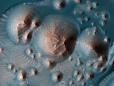
ANSTO provides a range of capabilities using neutrons, X-rays and infrared radiation to study the solids, liquids and gases that might be found in materials in our solar system and beyond.
ANSTO provides a range of capabilities using neutrons, X-rays and infrared radiation to study the solids, liquids and gases that might be found in materials in our solar system and beyond.