The best behind the neutron beam: Awards announced
Four annual awards in neutron scattering were announced at Australian Neutron Beam Users Group (ANBUG) and AINSE Neutron Scattering Symposium (AANSS) to individuals with strong links to ANSTO


Showing 361 - 380 of 554 results
Four annual awards in neutron scattering were announced at Australian Neutron Beam Users Group (ANBUG) and AINSE Neutron Scattering Symposium (AANSS) to individuals with strong links to ANSTO
A targeted radioactive infusion that is a game-changer in late-stage prostate cancer can also dramatically improve outcomes for patients in earlier stages of this disease, a Peter Mac-led study has shown.
Researchers based at Monash University and the Swedish Museum of Natural History have pioneered the use of nuclear imaging techniques at ANSTO’s Centre for Neutron Scattering to resolve long-standing problems in plant evolutionary history linked to wildfires.
ANSTO Nuclear Fuel Cycle researcher recognised for contributions to crystallography and structural chemistry on actinides and lanthanides.
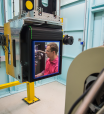
The High Performance Macromolecular Crystallography beamline will enable the study of very small (sub-5 micrometre) or weakly diffracting crystals, providing a state-of-the-art high-throughput facility for researchers. MX3 will be able to study the structures of large proteins and protein complexes for virology, drug design and industrial applications via goniometer mounted crystals, in-tray screening, or via serial crystallography methods.
The celebration of the UN’s International Women’s Day 2023 has a theme that highlights the power of innovative IT to combat discrimination and the marginalisation of women globally.
With more than thirty years of expertise and experience in critical minerals and rare earths extraction and processing, ANSTO welcomes the Australian Government’s announcement of a 2022 Critical Minerals Strategy
In part 1 of this two-part series, ANSTO scientists from across the organisation became film critics to review Christopher Nolan’s new movie, Oppenheimer, which explores the life of the director of the Manhattan Project to develop an atomic weapon.
Insights into the formation of deep river canyons mountain ranges in intra-tectonic plate areas by SAAFE Scholarship recipient and collaborators.
Pioneering work on materials for energy production, such as lithium ion batteries, has made ANSTO a centre of specialist capabilities and expertise.
MABI instrument can determine both the concentration and source of black carbon pollution in the atmosphere.
The independent nuclear regulator, ARPANSA, is currently accepting submissions about ANSTO’s planned $59.8 million Intermediate Level Solid Waste Storage Facility.

ANSTO Synroc technology provides a safe, secure matrix for the immobilisation and final disposal of radioactive waste.
Today is World Environment Day, a United Nations initiative for encouraging worldwide awareness and action for the environment. This year’s theme is “Beat Air Pollution”, a call to action to combat this global crisis.
A rare collection of traditional Aboriginal wooden objects in varying degrees of preservation found along a dry creek bed in South Australia have been dated to a period spanning 1650 to 1830 at the Centre for Accelerator Science at ANSTO.
An unassuming rock shelter in the Flinders Ranges has been revealed as the oldest known evidence of Aboriginal Australian settlement, thanks in part to advanced nuclear techniques, technology and scientists.

Dr Karina Meredith was appointed Director of the new Research and Technology Group for Environment effective 15 January 2024.