Symposium on advanced therapy
Science and medical experts meet in Adelaide to discuss great potential of particle therapy in Australia


Showing 361 - 380 of 675 results
Science and medical experts meet in Adelaide to discuss great potential of particle therapy in Australia

ANSTO is an experienced provider of Teacher Professional Development for Australian and International teachers and our courses cover a wide range of topics. Hear from expert speakers, receive new education resources, and develop lessons for your own class.
Sharing ANSTO education expertise in nuclear with international secondary school teachers in IAEA training.

With more than 50 years of experience in monitoring natural and anthropogenic radionuclides in the environment, ANSTO can provide the crucial data and insights you need to assist with the planning and risk management associated with oil and gas decommissioning.
ANSTO is participating in a new Australian Research Council (ARC) Centre of Excellence for Indigenous and Environmental Histories and Futures (CIEHF) to be headquartered at James Cook University (JCU) that aims to bring Indigenous and environmental histories to the forefront of land and sea management.
Today The Australian ran a story entitled “Fears for indigenous lands as foreign nuclear waste headed our way”, 18 September 2018. ANSTO was not contacted in relation to the article, but can provide the following information in response which can be attributed to a spokesperson.
The cost of building radiation-hardness testing into the design and qualification of electronics is typically well under one per cent of a major project’s budget.
On behalf of Australia, ANSTO, the only nuclear reactor facility in Australia, supports the International Atomic Energy Agency (IAEA) to undertake its role in facilitating national, regional, and international efforts to enhance nuclear security, including measures to protect against nuclear terrorism.
Deuteration and nuclear techniques can contribute to the science of beauty.
NSW grants bolster additive manufacturing and groundwater processing capabilities.
Today Dr Jenine McCutcheon from the University of Queensland’s School of Earth and Environmental Sciences has been recognised for her outstanding research with the Australian Synchrotron's Stephen Wilkins Medal.
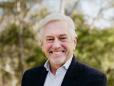
Dr Storr has worked for over 40 years in nuclear science and technology in a range of positions spanning operations, research and executive management.
Access to a ‘window into the cell’ with University of Wollongong cryogenic electron microscope at ANSTO.

The BRIGHT Project will expand the beamline infrastructure of the Australian Synchrotron to increase both its capacity and capabilities.
Although Australia does not use nuclear energy for power needs, it does have the nuclear capabilities, knowledge, and expertise provided by ANSTO to ensure the national interest in nuclear matters is protected and advanced.
The IAEA is providing $1.3m over four years to implement a new, Australian-led patient-care project for the Asia and Pacific region