
Radiation Testing - Expertise
The Centre for Acclerator Science operates accelerators that can be used for space radiation testing.


Showing 41 - 60 of 84 results
The Centre for Acclerator Science operates accelerators that can be used for space radiation testing.
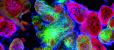
The measurement and manipulation of radiation and radioactive materials within biological systems. Capabilities include access to a range of radioisotopes, gamma/X-ray sources and a selection of X-ray beams, ion beams and neutron beams for irradiation.

ANSTO researchers have taken up the challenge to develop a coating for the cladding used in nuclear reactors to prevent it from taking up hydrogen and releasing it if temperatures get too high and repair itself if damaged.
Three new federal grants were announced to support manufacturing and nuclear technologies.

The International Synchrotron Access Program (ISAP) is administered by the Australian Synchrotron and is designed to assist Australian-based synchrotron users to access overseas synchrotron related facilities.

The new facility will be built around a product line of ANSTO’s design – a new Technetium-99m generator – that will enable greater process automation than is possible with existing technology, leading to improvements in efficiency, quality and importantly the highest levels of production safety.
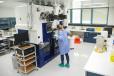
Research and development activity explores new, boutique radioisotopes, including positron, gamma and beta/gamma emitter. The aim is to provide material for the next generation of diagnostic and therapeutic radiopharmaceuticals
Australia retained its position as the world's highest-ranked country for securing nuclear materials against theft in the 2026 NTI Nuclear Security Index.
Over the past 70 years ANSTO has been building Australia’s nuclear expertise and despite being small in scale, today we are complex and sophisticated nuclear nation.
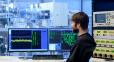
Accelerator Mass Spectrometry (AMS) is an ultra-sensitive analytical technique based on the use of an ion accelerator as a powerful mass spectrometer.
ANSTO announces the recipients of the 2022 organisational awards

The National Deuteration Facility offers access to deuterated molecules prepared by both in vivo biodeuteration and chemical deuteration techniques.
ANSTO launches new area of space research in collaboration with the National Centre for Space Studies and the National Institute of Health and Medical research in France.
Strategic partnership with the University of Sydney expanded to continue a long history of research collaboration.
ANSTO strengthened its longstanding partnership with Indonesia's National Research and Innovation Agency (BRIN) through a recent visit to Jakarta and Serpong aimed at expanding collaboration in nuclear science, technology and research infrastructure.
ANSTO will make an application to the independent nuclear regulator, ARPANSA, to vary its license for its Interim Waste Store. The original operating license was approved in 2015, enabling the facility to hold what is called a TN-81 cask of intermediate-level radioactive waste that was safely repatriated from France in 2015.

The Radon Analytical Laboratory operates a comprehensive suite of instrumentation for the monitoring and analysis of natural radioactivity resulting from radon, thoron and their progeny.
Meeting of minds about potential next-generation cancer treatment for Australians