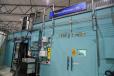
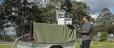
The Advanced Diffraction and Scattering beamlines (ADS-1 and ADS-2) are two independently operating, experimentally flexible beamlines that will use high-energy X-ray diffraction and imaging to characterise the structures of new materials and minerals.
Senior Beamline Scientist
Role at ANSTO
ANSTO plays a leading role in measuring and characterising fine particles from a range of locations around Australia and internationally.
Publications and resources from the Powder Diffraction beamline.
Research undertaken by Flinders University, the University of Cincinnati (US), Guangzhou University (China) and ANSTO has evaluated a new process to encapsulate fish oil in nanoparticles
Director Australian Synchrotron
Role at ANSTO
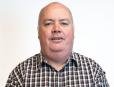
Imaging Neurophysiologist
Role at ANSTO

Quality and Risk Manager
Kathleen manages the quality and document management systems, and oversees procedures for inspection, testing, and calibration of equipment and systems, to support the accelerator operations and beam lines.
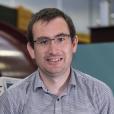
Instrument Scientist (Neutron Reflectometry)
Role at ANSTO
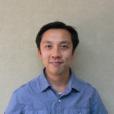
Radiochemistry Team Leader, Lucas Heights
Role at ANSTO
Tien leads research tasks in the investigation of novel approaches to the synthetic incorporation of PET and SPECT radioisotopes onto small molecules, peptides and proteins.
Stable, highly conductive 2D nanosheets of boron nitride promising new material.
ANSTO is committed to minimising the environmental impact of its activities and to implementing strategies which have a positive effect on the environment. The ANSTO Work Health Safety and Executive Committee oversees this process.
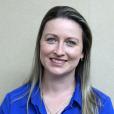
Radiochemist
Role at ANSTO
The ARC Centre of Excellence (CoE) for Green Electrochemical Transformation of Carbon Dioxide, GETCO2, will support innovative approaches to carbon capture.
Beamline scientist
Role at ANSTO
Study shows for the first time that vegetation in the Windmill Islands, East Antarctica is changing rapidly in response to a drying climate.
Accelerator Scientist, Centre for Accelerator Science
Role at ANSTO
Pagination