

Showing 41 - 60 of 96 results

The Australian Synchrotron
A world-class national research facility that uses accelerator technology to produce a powerful source of light-X rays and infrared radiation a million times brighter than the sun.
Research to aid the detection and treatment of dementia

Safeguarding the future of Australia's nuclear medicine
The new facility will be built around a product line of ANSTO’s design – a new Technetium-99m generator – that will enable greater process automation than is possible with existing technology, leading to improvements in efficiency, quality and importantly the highest levels of production safety.
Collecting ice cores for research
Dr Andrew Smith has just finished collecting ice cores and snow samples on the summit of Law Dome in Antarctica,

Isotope Ecologist
Role at ANSTO

Zoom into STEM January School Holiday Workshops
Online and interactive while in your home. Kids can zoom into these school holidays workshops and create movies, animations, arcade games, roller coasters and more. Limited spaces: book now.
Advanced nuclear waste forms
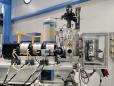
High-energy heavy ion microprobe
The high-energy heavy-ion microprobe is used for the characterisation or modification of material properties at depths from approximately 1 micrometre to maximum depths of up to 500 micrometres from the material surface.
Plans to safely manage medical and research waste
ANSTO will make an application to the independent nuclear regulator, ARPANSA, to vary its license for its Interim Waste Store. The original operating license was approved in 2015, enabling the facility to hold what is called a TN-81 cask of intermediate-level radioactive waste that was safely repatriated from France in 2015.

Lead, Food Materials Science; Instrument Scientist, QUOKKA (Small-Angle Neutron Scattering); Honorary Professor, CNFS, The University of Queensland
Role at ANSTO

Nanoprobe beamline (NANO) - under construction
The BRIGHT Nanoprobe beamline provides a unique facility capable of spectroscopic and full-field imaging. NANO will undertake high-resolution elemental mapping and ptychographic coherent diffraction imaging. Elemental mapping and XANES studies (after DCM upgrade) will be possible at sub-100 nm resolution, with structural features able to be studied down to 15 nm using ptychography.

What is radiation?
Radiation can be described as energy or particles from a source that travel through space or other mediums. Light, heat, and wireless communications are all forms of radiation.

Advanced Diffraction & Scattering Beamlines (ADS-1 and ADS-2) UNDER CONSTRUCTION
The Advanced Diffraction and Scattering beamlines (ADS-1 and ADS-2) are two independently operating, experimentally flexible beamlines that will use high-energy X-ray diffraction and imaging to characterise the structures of new materials and minerals.

Research Program Manager
Role at ANSTO

Radiochemistry Team Leader, Lucas Heights
Role at ANSTO
Tien leads research tasks in the investigation of novel approaches to the synthetic incorporation of PET and SPECT radioisotopes onto small molecules, peptides and proteins.
Improving carbon dating
Study helps make carbon dating a more accurate chronological tool.
ARC Discovery project funding for geometry of the genome and the engineering of solid-state sodium batteries announced
Three ANSTO scientists are contributing to two recently awarded Australian Research Council Discovery Project grants.

Radiochemist
Role at ANSTO
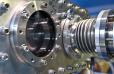
Recoil Time of Flight Spectrometry
Recoil Time of Flight Spectrometry (RTOF) is used to detect a multitude of elements by separating their masses. unambiguously