Independent report into safety of Building 23 at ANSTO
The final report on the safety of Building 23 by the independent expert review team has been completed.


Showing 41 - 60 of 147 results
The final report on the safety of Building 23 by the independent expert review team has been completed.
(ANSTO) has welcomed the launch of the new National Science Statement and revitalised National Science and Research Priorities by Minister for Industry and Science, The Hon Ed Husic MP and Australia’s Chief Scientist, Dr Cathy Foley AO PSM.
The 2021 intake of bright young graduates have arrived at the ANSTO Precinct at Lucas Heights and this week will commence their exciting new career to become the nation’s future leaders in STEM and innovation.

Publications, posters and conference presentations for fire impacts reconstructed from a southwest Australian stalagmite.
The Australian Synchrotron has played a crucial role in the discovery of a new cancer drug for the treatment of leukaemia.
Researchers and industry partners from UNSW Australia, the Australian Centre for Nanomedicine, Children’s Cancer Institute and Inventia Life Sciences Pty Ltd have been awarded the 2021 ANSTO Eureka Prize for Innovative Use of Technology for their method to rapidly-produce 3D cell structures
After careful selection, three Australian science teachers are set to fly to Geneva today after winning positions on the International High School Teacher Programme at CERN.


Highlights of the Energy Materials Project.

ANSTO has been tracking and publishing data on fine particle pollution from key sites around Australia, and internationally, for more than 20 years.
There is chemistry at work to help us enjoy the New Year's Eve celebration.

ANSTO is seeking nominations for the ANSTO Australian Synchrotron Stephen Wilkins Thesis Medal.
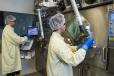
See details of previously published customer updates from our Health products team.

Read about an ANSTO scientist and their work to prepare for a school project or interview.
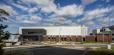
To enable the production of nuclear medicine, ANSTO operates manufacturing, processing and distribution facilities in Sydney.



A selection of research highlights, instrument news and technical developments for scientists.