
Privacy Policy
Australian Nuclear Science and Technology Organisation (ANSTO) is committed to protecting your personal information in accordance with the Privacy Act 1988 (Cth) (Privacy Act) and the Australian Privacy Principles.


Showing 41 - 60 of 140 results
Australian Nuclear Science and Technology Organisation (ANSTO) is committed to protecting your personal information in accordance with the Privacy Act 1988 (Cth) (Privacy Act) and the Australian Privacy Principles.

ANSTO provides access to specialised facilities and capabilities by application. Please ensure that you contact the relevant ANSTO scientist for advice before submitting a proposal.


An instrument used to study any materials with structure of the length scale 1-100nm.

Highlights of the Energy Materials Project.

Role at ANSTO



Hot Isostatic Pressing supports advanced manufacturing by increasing a material's density and reducing porosity. This capability complements ANSTO’s extensive suite of instruments and techniques for characterising materials and final products.
International research led by Monash University and the Peter Doherty Institute for Infection and Immunity has achieved a proof of concept for a new, fast, portable saliva screening test that uses an infrared light technology to confirm infection with SARS-CoV-2.

Project members of Magnetism.


Researchers developing new materials and devices that can withstand the harsh radiation environment in space are using the unique ANSTO’s capability to simulate the effects of high-energy ion irradiation on the properties and performance of these materials and devices.

ANSTO seeks candidates who are passionate about making a contribution to Australian society through supporting nuclear science and technology.
Health researchers have developed a new method for producing PET radiotracers.
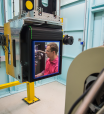
The High Performance Macromolecular Crystallography beamline will enable the study of very small (sub-5 micrometre) or weakly diffracting crystals, providing a state-of-the-art high-throughput facility for researchers. MX3 will be able to study the structures of large proteins and protein complexes for virology, drug design and industrial applications via goniometer mounted crystals, in-tray screening, or via serial crystallography methods.
ANSTO recognises the traditional indigenous owners of the land at all its sites and works to contribute to the recognition of the indigenous cultural heritage of Australia.