Sika operation and research agreement renewed
Agreement extends Taiwan’s National Synchrotron Radiation Research Center’s operation of neutron scattering instrument at ANSTO


Showing 421 - 440 of 907 results
Agreement extends Taiwan’s National Synchrotron Radiation Research Center’s operation of neutron scattering instrument at ANSTO
ANSTO scientists have been featured in the new issue of Careers with STEM Science, a publication produced for high school students, undergraduates and grads, careers advisors, teachers and parents to discover careers and study paths.
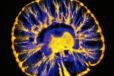
The Biosciences team undertakes the radiolabelling of chemical, biochemical. biological or material vector for the purpose of radiotracing in living systems.

The Centre for Accelerator Science provides complementary capabilities to Synchrotron-based and the neutron-based research with the operation of four accelerators, associated beamlines, clean laboratories and in-house expertise in ion beam analysis (IBA) and accelerator mass spectrometry (AMS).
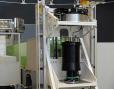
Applications, Recent Results and Publications on the Koala instrument.
Testing at ANSTO’s Centre for Accelerator Science supports an action plan just published by the Australian Packaging Covenant Organisation (APCO) to phase out per- and polyfluoroalkyl substances (PFAS) in fibre-based food contact packaging in Australia by December 2023.


It's ANSTO's role to keep Australia across the very latest developments in nuclear science and technology from around the world. Part of this responsibility is keeping us abreast of the latest developments in nuclear power technologies.


PhD candidate Vienna Wong is using her FutureNow Scholarship to research ultra-high temperature ceramics, which are emerging materials for extreme environments.
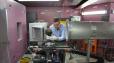
Neutron imaging or tomography creates a whole series of three-dimensional images of an object that can be reconstructed.

Collaborators on the Magnetism project.
ANSTO announces the recipients of the 2022 organisational awards
The installation of a cold neutron source (CNS), a component that reduces the energy and speed of the neutrons from a research reactor for use in scientific instruments, was successfully completed in September 2024.
Neutron scattering techniques help characterise the structure of a particle based emulsifier